
How to study a written swing trading course with the charts open

You finish the chapter and can recite the definition. The chart open next to the PDF is less helpful: three plausible levels, a market that keeps moving, and an example in the book that looked far cleaner.
That is a good moment to stop reading. The next job is to apply one idea carefully enough to describe where it becomes uncertain. A written course works best as a reference for that job, and not as a queue you feel obliged to finish.
Give each study session one question
Pick a question narrow enough to answer on a chart: what is the market context for this setup, which event makes the company worth reviewing, where does the planned trade become invalid? Read the relevant section and keep it open next to your example.
If live price changes break your concentration, start with a historical chart. Hide later bars where your platform allows it, or save a dated screenshot and work only from what was visible at that point. Note when you can already see the outcome, because hindsight makes everything look obvious.
Write down your answer, including the part you cannot answer
A difficult chart teaches more than a tidy one. Write the answer you can support and the part you cannot. 'I can find the entry area but I cannot explain the catalyst' is a better learning result than deciding the whole setup looks wrong.
Keep the source of each answer beside it. A chart can support a statement about price structure. A filing or announcement from the issuer may be needed for the business event. A price pattern cannot prove anything about a company's cash or customers.
How the Operator's Playbook is meant to be used
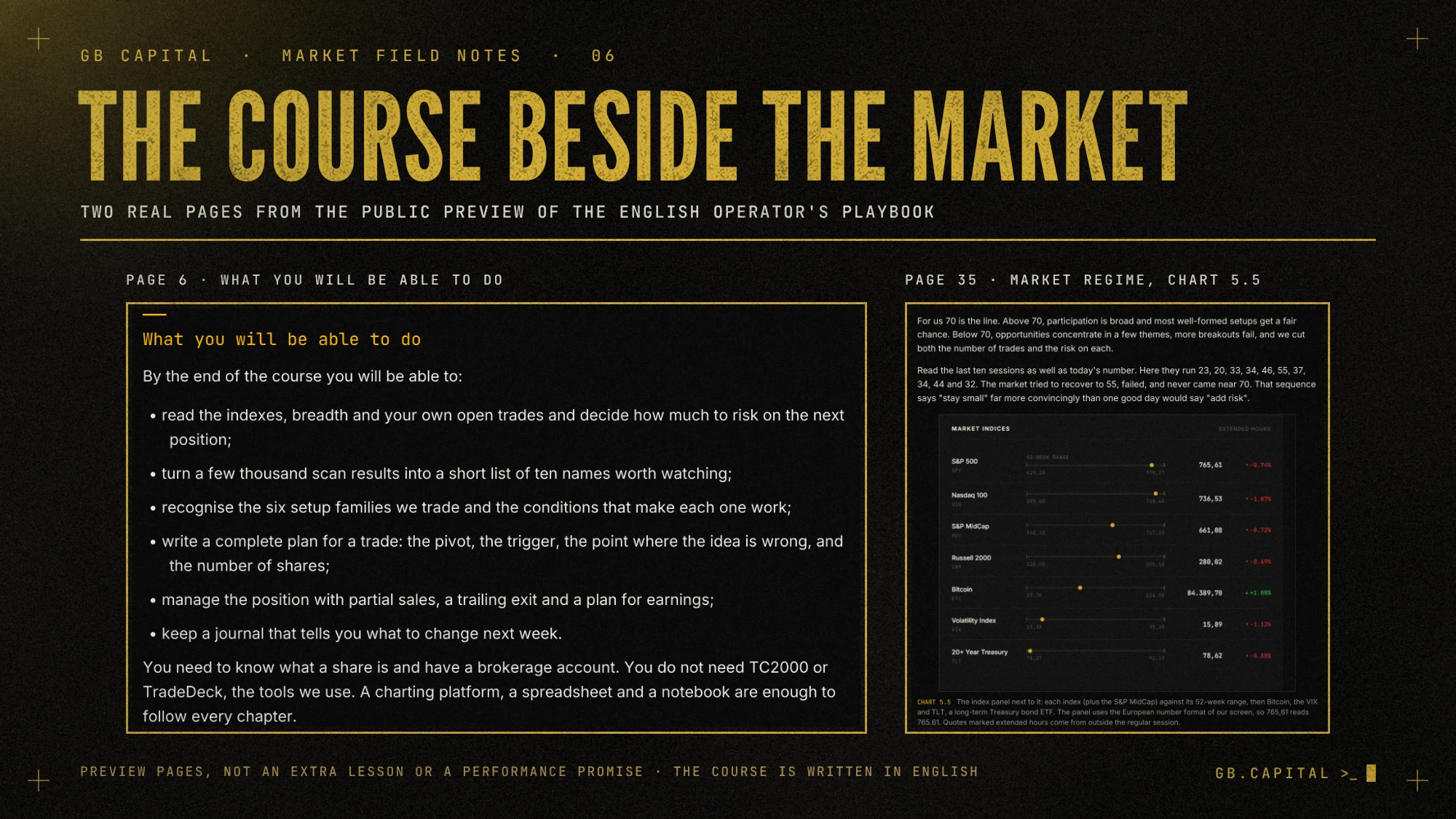
The Operator's Playbook is our English written swing trading course. The format lets you keep the relevant explanation open while you look at a market or company example. The public preview sets out the outcomes: reviewing market context, cutting a discovery list down, preparing a trade plan, managing positions and keeping a journal that is useful.
The work builds on itself. An entry with no stated invalidation leaves position sizing unfinished. A catalyst with no date can outlive the reason it mattered. After you work on one piece, go back to the previous decision and check the two still fit.
You do not need our TC2000 setup or TradeDeck to follow every chapter. The course introduction says a charting platform, a spreadsheet and a notebook are enough. Software may make your process easier, and buying it is a separate decision from understanding a lesson.
Keep a record of your uncertainty
For each exercise, save the chart date, the section you used, your answer and one unresolved question. Keep it short enough to reread. A folder of screenshots becomes useful when the file names and notes say what each one was meant to test.
When the market is open, studying and acting are different things. Reading a lesson next to a moving chart does not require an order. An example you cannot explain yet belongs in the exercise record, and not in a trade placed to prove you understood it.
The call included with the course
The English course includes one 50-minute educational call. Bring the exercise that shows best where your reasoning gets stuck: the original screenshot, your written answer and the question you could not settle. That gives the conversation something concrete to examine. You can write to invest@gb.capital with questions about the material or to arrange the included call. Separate sessions are available if you later want more time, and you do not need them to use the course.
See the English Operator's Playbook and its preview pages. Before you decide, take one concept from our free introduction to the swing trading process, open a chart and write the question you would need a longer course to answer.
Educational material, not investment advice or a recommendation.
The included course call must be booked within 90 days of purchase. Email invest@gb.capital with your order reference and three suitable times.