
AfterHours Tales: Anduril Industries
The Future of Warfare: Smarter, Faster, and Fully Autonomous
When it comes to private companies, few generate as much buzz as Anduril Industries. While it’s not yet a publicly traded stock, there are compelling reasons why understanding this company now could give investors a significant edge in the future.
1. Preparing for a Potential IPO
You never know when a private company might decide to go public, and being ahead of the curve can be a game-changer. By diving into Anduril’s business model, technology, and market position now, investors can gain a deeper understanding of its potential before Wall Street analysts and the broader market catch on. If Anduril ever files for an IPO, having this knowledge could provide a strategic advantage.
2. Cutting Through the Hype
Anduril has become a “trendy” name in the defense and tech sectors, with many people discussing its potential without fully grasping what the company does. By exploring its core technologies—like the Lattice OS, autonomous systems, and solid rocket motors—we aim to demystify the company and provide a clear picture of its innovations and market impact.
3. Spotting Related Investment Opportunities
Even if Anduril remains private, understanding its ecosystem can help investors identify opportunities in companies linked to its success. For example:
Dominari (DOMH): A company with investments in Anduril, xAI, Epic Games, and Discord, offering indirect exposure to Anduril’s growth, almost increased 6 folds in a short matter of time.
Archer Aviation (ACHR): Recently announced a partnership with Anduril to develop next-generation defense aircraft, including a hybrid-propulsion VTOL aircraft targeting a U.S. Department of Defense program. Archer also raised $430M in equity capital, backed by major players like Stellantis, United Airlines, and Abu Dhabi’s 2PointZero. Can This Be The Next Big Winner?
Microvision (MVIS): Tech company with dual expertise in AR (Augmented Reality) and LiDAR technology, with their MEMS-based laser scanning technology integrated into Microsoft's HoloLens 2.
While currently focused on automotive LiDAR solutions, their dormant AR technology portfolio remains valuable. Palmer Luckey has historically shown interest in MVIS and now oversees the $22B IVAS contract, potentially positioning Anduril to acquire MicroVision. The company's unique position with both advanced AR and LiDAR capabilities makes it particularly attractive for military applications, especially in Luckey's vision of teleoperated robotic warfare systems. There is no concrete evidence of any discussions, deals, or interest between the companies, and all potential scenarios remain market speculation.
These partnerships and investments highlight that Anduril’s influence extends beyond its operations, creating ripple effects across the aviation, defense, and technology industries.
By understanding Anduril’s role in shaping the future of defense and technology, investors can position themselves to capitalize on opportunities tied to its growth—whether through direct exposure in the future or by identifying companies that benefit from its partnerships and innovations.
Thesis
The United States military has historically been a major driver of technological innovation, especially during the transformative periods following World War II and throughout the Cold War. During these times, large defense budgets driven by geopolitical tensions and national security needs, along with extensive government contracts, significantly contributed to the growth of Silicon Valley. This combination of resources led to groundbreaking advancements in areas such as missile guidance systems and satellite technology, which have greatly influenced modern warfare.
However, in the 1990s, this dynamic began to change. A reduction in military spending combined with the rise of consumer internet technologies resulted in Silicon Valley becoming increasingly detached from defense efforts. As a result, the Department of Defense (DoD) became more dependent on traditional contractors like Lockheed Martin and Raytheon. While these companies excel at building large-scale platforms such as aircraft carriers and advanced fighter jets—key symbols of American military power—they have faced challenges adapting to the rapidly changing demands of 21st-century warfare.
Modern conflicts often require quick responses enabled by autonomous systems powered by artificial intelligence (AI) and innovative software solutions that surpass traditional methods. Anduril Industries emerged in 2017 as a forward-thinking defense technology company aiming to bridge this gap between cutting-edge Silicon Valley innovation and urgent military needs. By utilizing state-of-the-art AI technologies and developing autonomous systems for complex environments through a vertically integrated approach from concept to deployment, Anduril is reshaping pathways within the defense sector.
Unlike established contractors that rely heavily on government funding for research and development (R&D), Anduril self-funds its R&D initiatives. This strategy allows them to deliver ready-to-use products more quickly and cost-effectively than traditional methods permit.
Anduril’s goal is clear: they aspire to become not only America’s default defense contractor but also serve its allies worldwide. Their mission is crucial for maintaining America's technological edge amid an era defined by autonomous warfare where speed, adaptability, and innovation are essential for success on contemporary battlefields. In this ever-changing environment where threats are diverse and complex, Anduril represents a strategic shift towards effectively integrating advanced technology into national defense frameworks—a necessary evolution for safeguarding future national security interests.
🌱 Support Our Work: Buy Us a Coffee or Shop Our Services! 🌱
Your small gesture fuels our big dreams. Click below to make a difference today.
[☕ Buy Us a Coffee]
[🛒 Visit Our Shop]

Founding Story
Anduril's journey began when two visionaries' paths converged: Trae Stephens, a venture capitalist at Founders Fund and former policy advisor at the DoD, and Palmer Luckey, the inventor of Oculus VR. Stephens had developed a bold thesis through his experience: the defense industry was broken, and a new kind of contractor was needed—one that could move at the speed of Silicon Valley while addressing the unique challenges of modern warfare. Meanwhile, Luckey, following his departure from Facebook, was seeking his next mission in technology and national security.
In 2017, their shared vision crystallized when they decided to revolutionize the defense industry together. Both brought unique and complementary strengths to the table: Stephens with his deep understanding of defense policy and venture capital, and Luckey with his technological innovation expertise and passion for national security. As equal partners, they founded Anduril Industries, choosing to name their company after the legendary sword from The Lord of the Rings—a fitting symbol for their joint mission to defend the free world through technological innovation.
To round out the founding team, they brought in:
Brian Schimpf: Former director of engineering at Palantir, who became Anduril’s CEO.
Joseph Chen: A former Army paratrooper and Oculus engineer.
Matt Grimm: A seasoned operator who became COO, tasked with scaling the company.
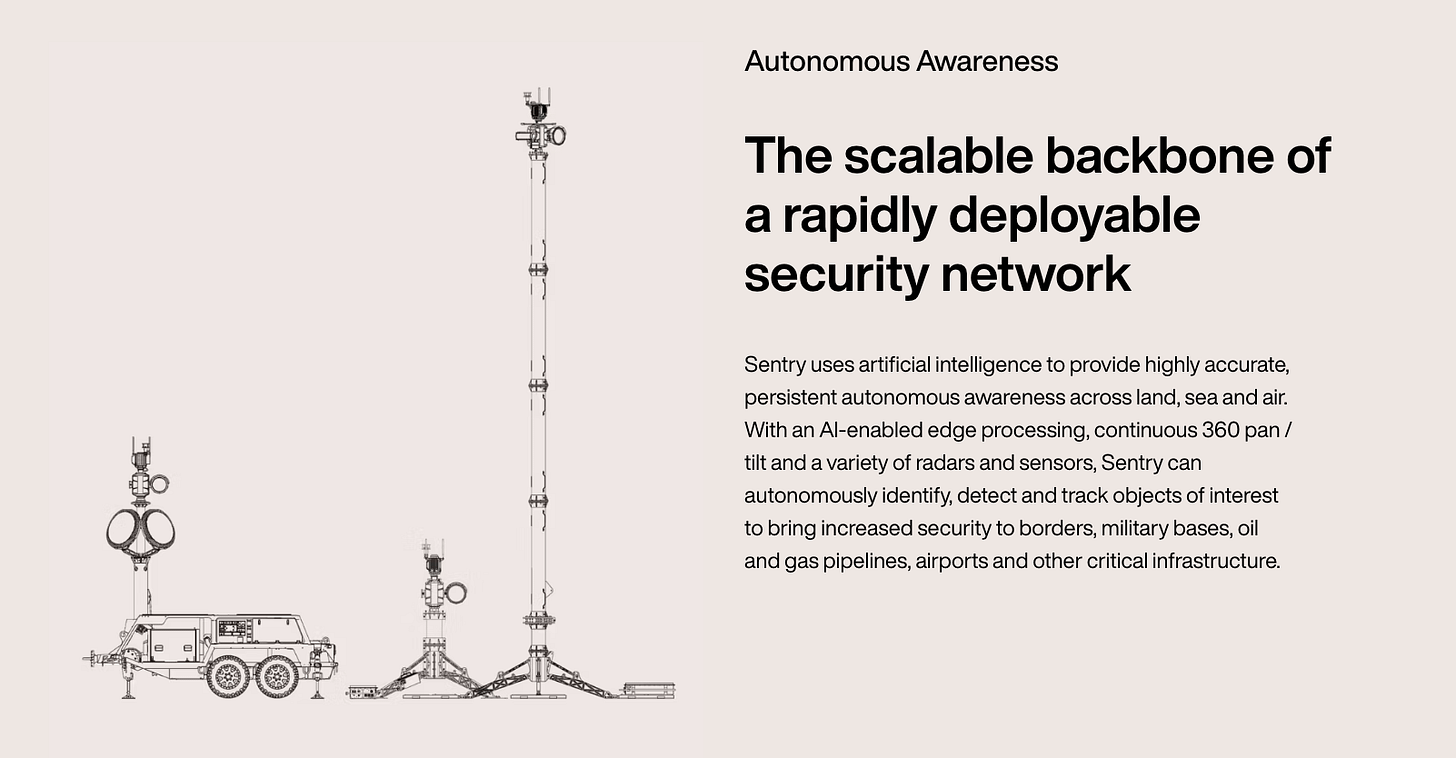
The team’s combined expertise in software, hardware, and military operations allowed Anduril to hit the ground running. Within months, the company had developed its first product: an AI-powered sentry tower for border surveillance.


Product Ecosystem
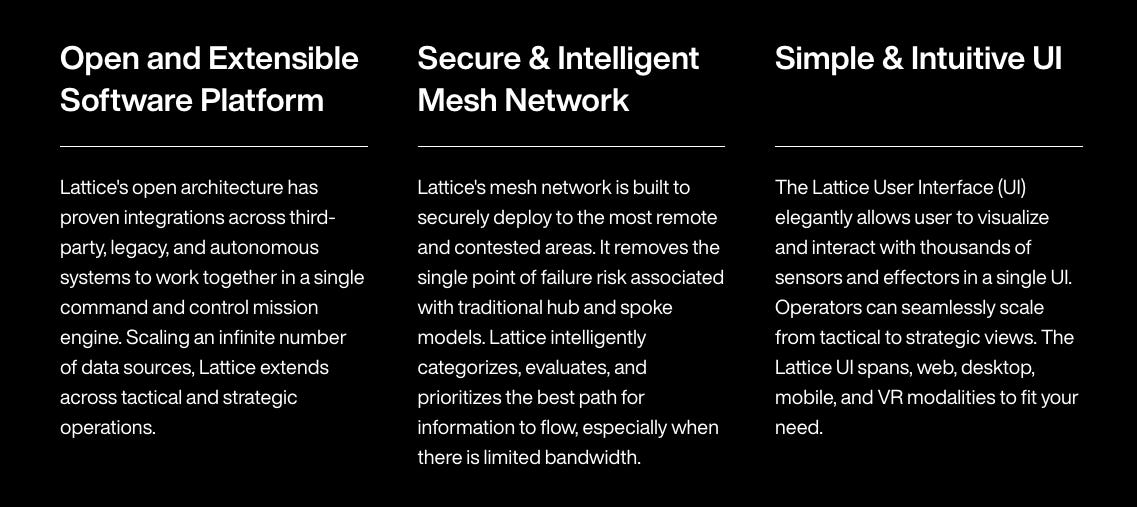
At the heart of Anduril Industries’ groundbreaking approach to defense technology is Lattice OS, a revolutionary software platform transforming military operations. Lattice OS is not just a capability; it serves as the central nervous system of Anduril’s ecosystem, seamlessly integrating data from sensors, drones, autonomous vehicles, and other hardware to provide real-time situational awareness, decision-making, and mission execution.
In an era where speed, precision, and adaptability are critical for battlefield success, Lattice OS offers a game-changing advantage. It enables operators to process vast amounts of data, make informed decisions in seconds, and execute complex missions with minimal human intervention.
What is Lattice OS?
Lattice OS is an AI-powered battlefield operating system that connects and coordinates a wide array of autonomous systems, sensors, and hardware assets. It acts as a command hub, providing operators with a unified, real-time view of the battlespace.
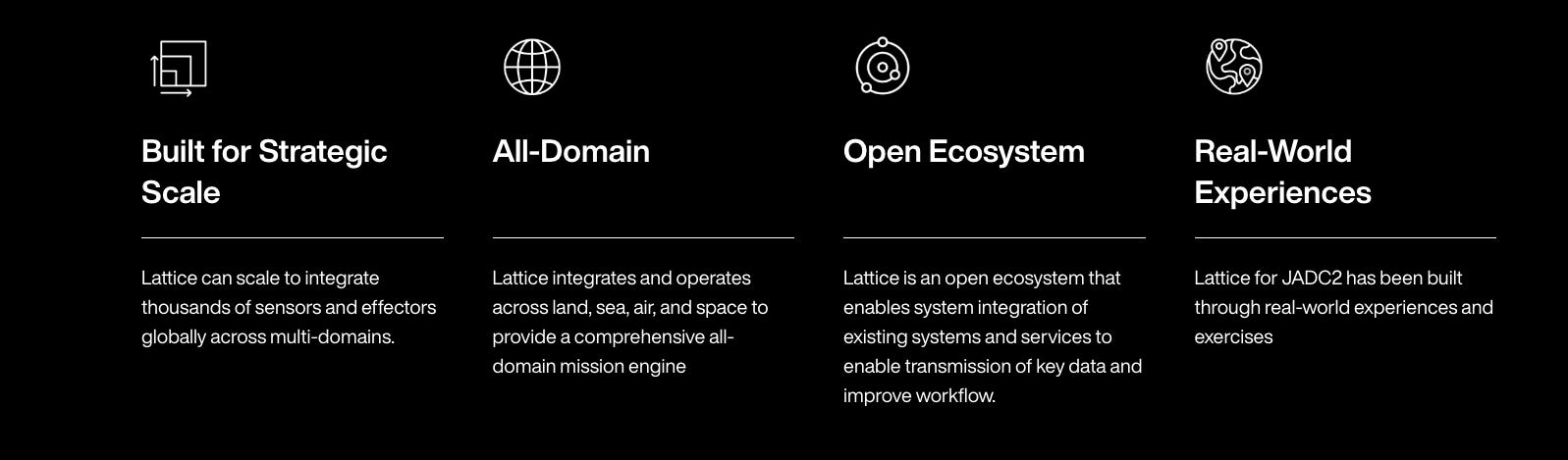
The system is designed to address the challenges of modern warfare, where threats are dynamic, multi-domain (land, air, sea, and space), and often require split-second decisions. By leveraging advanced technologies like artificial intelligence (AI), machine learning (ML), sensor fusion, and edge computing, Lattice OS enables military personnel to understand, decide, and act faster and more effectively than ever before.
Key Capabilities of Lattice OS
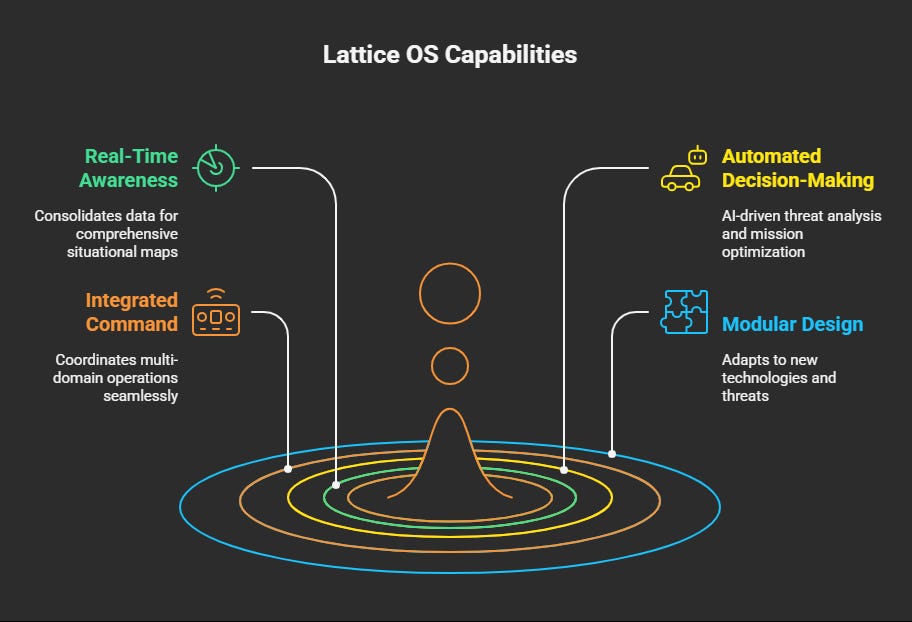
1. Real-Time Situational Awareness
Lattice OS processes millions of data points per second from a wide range of sources, including:
Ground-based sensors (e.g., radar, infrared cameras)
Aerial drones (e.g., Ghost and ALTIUS systems)
Maritime systems (e.g., Dive-LD underwater vehicles)
Satellites and other external data feeds
Using sensor fusion and computer vision, Lattice OS consolidates this data into a single, intuitive interface. Operators can view a comprehensive, real-time map of the battlespace, complete with detailed information about every detected object, from enemy drones to ground vehicles.
For example, if a hostile drone enters a monitored airspace, Lattice OS will immediately identify it, classify it as a threat, and display its location, trajectory, and potential impact on the mission.
2. Automated Decision-Making
One of Lattice OS’s most powerful features is its ability to provide automated decision support. The system uses AI and predictive analytics to analyze the data it collects and recommend the best course of action.
Threat Classification: Lattice can distinguish between friend, foe, and neutral objects, reducing false alarms and ensuring that operators focus on genuine threats.
Predictive Analytics: The system anticipates enemy movements and suggests preemptive actions to neutralize threats before they escalate.
Mission Optimization: Lattice evaluates multiple scenarios and recommends the most efficient way to achieve mission objectives, whether it’s intercepting a drone, securing a perimeter, or deploying reinforcements.
For instance, if an enemy drone is detected near a critical military base, Lattice might recommend deploying an Anvil counter-drone system to intercept it. The operator can approve the action with a single click, and the system will autonomously execute the mission.
3. Integrated Command and Control
Lattice OS goes beyond providing recommendations—it enables operators to execute missions directly from the platform. Once a decision is made, Lattice coordinates the necessary hardware assets to carry out the mission.
Autonomous Coordination: Lattice can control multiple systems simultaneously, such as drones, sentry towers, and ground vehicles, ensuring seamless collaboration across domains.
Multi-Domain Operations: The system is designed to operate in complex environments, including contested, degraded, and GPS-denied conditions.
Scalability: Lattice can manage operations ranging from small-scale border surveillance to large-scale military campaigns involving hundreds of assets.
For example, during a border security operation, Lattice might detect a group of unauthorized vehicles attempting to cross the border. The system could deploy Ghost drones for aerial surveillance, activate Sentry Towers to monitor the area, and send alerts to ground patrols—all within seconds.
4. Modular and Future-Proof Design
Lattice OS is built with a modular, open-system architecture, making it highly adaptable to new technologies and mission requirements.
Software Agnostic: Lattice can integrate with third-party systems and hardware, ensuring compatibility with existing military infrastructure.
Continuous Improvement: The platform is designed to evolve, incorporating new AI algorithms, encryption protocols, and hardware capabilities.
In 2024, Lattice OS received a major upgrade with quantum-resistant encryption, enabling secure operations even in GPS-denied environments. This ensures that the system remains resilient against emerging cyber threats.
Force Protection: Securing the Tactical Edge with Autonomous Systems
Force protection is a critical component of Anduril’s mission to provide integrated, persistent security across land, sea, and air. Powered by the Lattice OS, Anduril’s force protection solutions are designed to detect, deter, and neutralize threats in real time, ensuring the safety of personnel, infrastructure, and assets at the tactical edge. This family of autonomous systems leverages advanced AI, sensor fusion, and edge computing to deliver unparalleled situational awareness and rapid response capabilities.
Key Capabilities of Force Protection
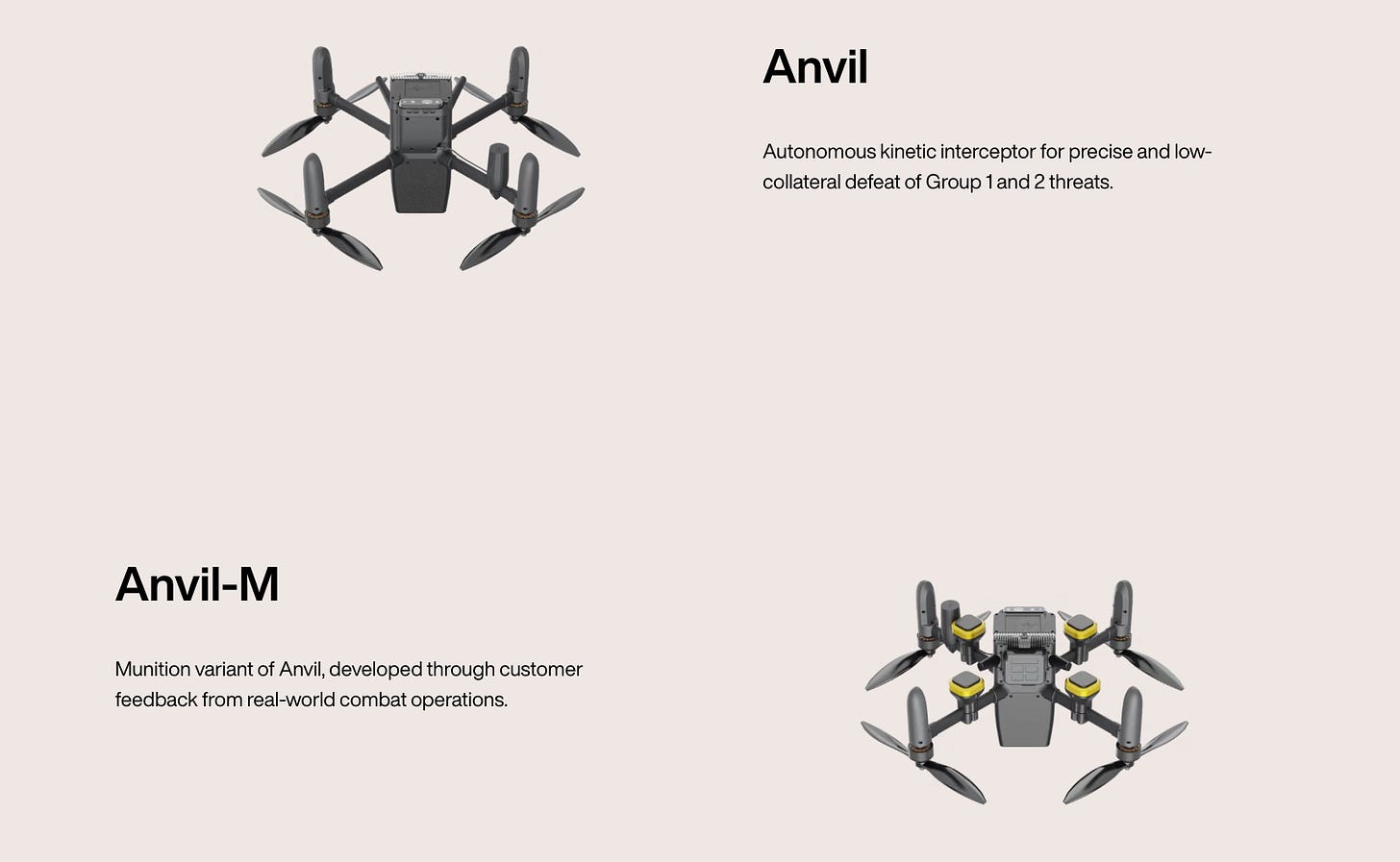
Counter-UAS (Unmanned Aerial Systems): Anduril’s counter-drone solutions, such as the Anvil interceptor, autonomously detect and neutralize hostile drones using kinetic energy. These systems are designed to operate in contested environments, minimizing collateral damage while ensuring airspace security.
Counter Intrusion: Ground-based systems, including Sentry Towers and portable sensors like Dust, provide 24/7 monitoring of critical areas. These systems autonomously identify and classify potential intrusions, enabling operators to respond swiftly and effectively.
Maritime Counter Intrusion: For coastal and offshore environments, Anduril’s maritime solutions, such as the Dive-LD autonomous underwater vehicle, monitor and protect against waterborne threats, including unauthorized vessels and underwater intrusions.
How It Works
Force protection systems are seamlessly integrated with Lattice OS, which acts as the command hub. For example, if an unauthorized drone approaches a military base, Lattice OS will:
Detect the drone using Sentry Towers or other sensors.
Classify the drone as a threat and recommend deploying an Anvil interceptor.
Execute the interception autonomously, neutralizing the threat within seconds.
This integrated approach ensures that threats are addressed proactively, reducing response times and enhancing operational efficiency.
Why It Matters
In an era of increasingly sophisticated threats, Anduril’s force protection systems provide a robust, scalable solution for safeguarding critical assets. By combining autonomous systems with the power of Lattice OS, Anduril ensures that military and security forces can maintain a tactical advantage, even in the most challenging environments.

Put the market on autopilot, experience the Best Platform with TC2000
Explore now →
Air Systems: Autonomous Aerial Solutions for Intelligence, Surveillance, and Reconnaissance
Anduril’s Air Systems is a suite of autonomous aerial platforms designed to perform a wide range of intelligence, surveillance, and reconnaissance (ISR) missions. Tasked, connected, and controlled by the Lattice OS, these systems work together to provide real-time situational awareness and mission execution across diverse operational environments. Whether it’s monitoring vast areas, tracking threats, or delivering precision strikes, Anduril’s air systems are built to operate autonomously and adapt to the dynamic needs of modern warfare.
Key Air Systems
Bolt
Purpose: A compact, high-speed drone designed for rapid deployment in tactical scenarios.
Capabilities: Bolt excels in short-range ISR missions, providing quick and actionable intelligence in fast-changing environments. Its agility makes it ideal for urban operations or close-quarters reconnaissance.

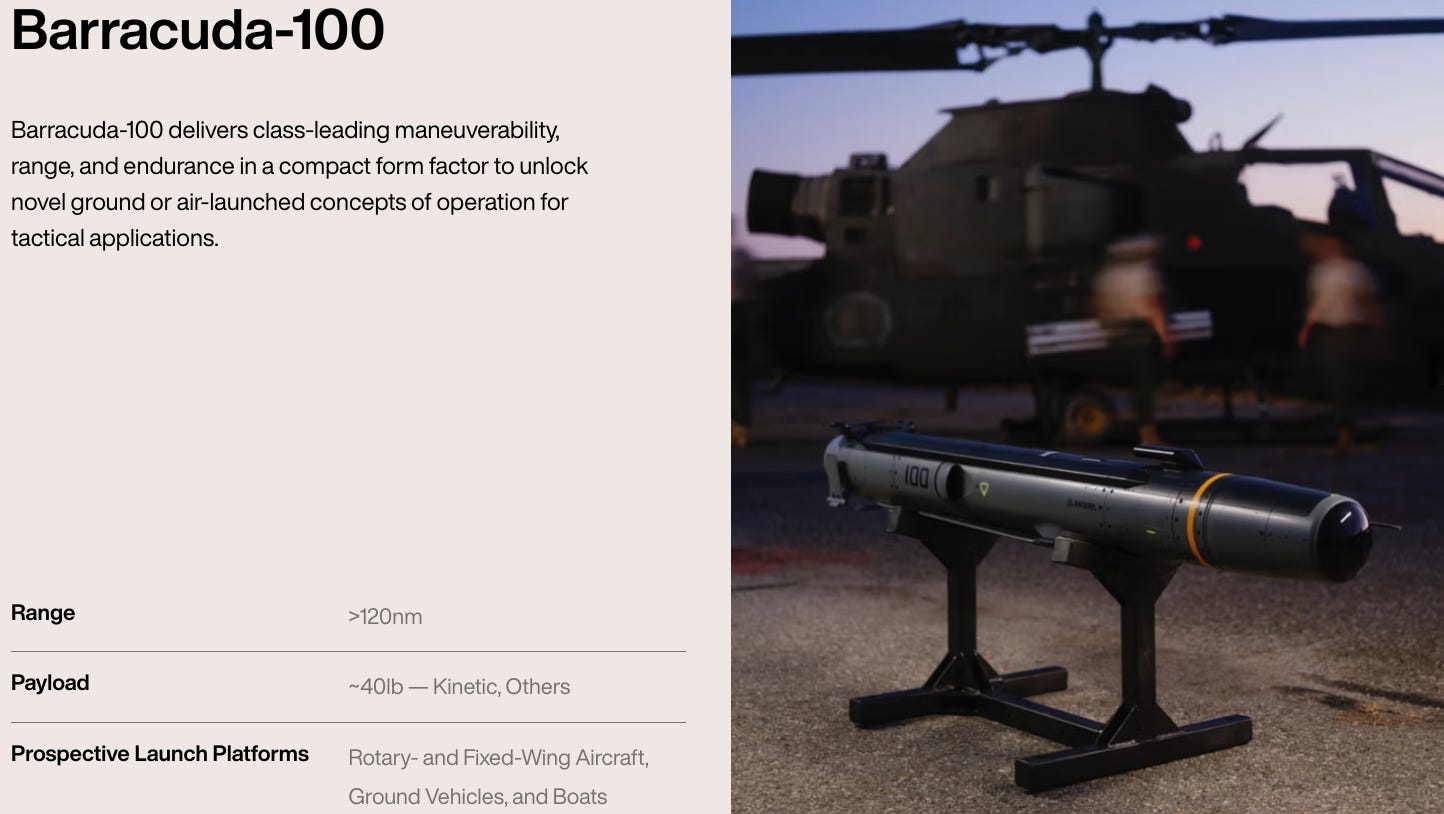
Barracuda
Purpose: A versatile drone optimized for long-endurance surveillance missions.
Capabilities: Barracuda is equipped with advanced sensors and cameras, enabling it to monitor large areas for extended periods. It is particularly effective for border security, infrastructure monitoring, and battlefield overwatch.
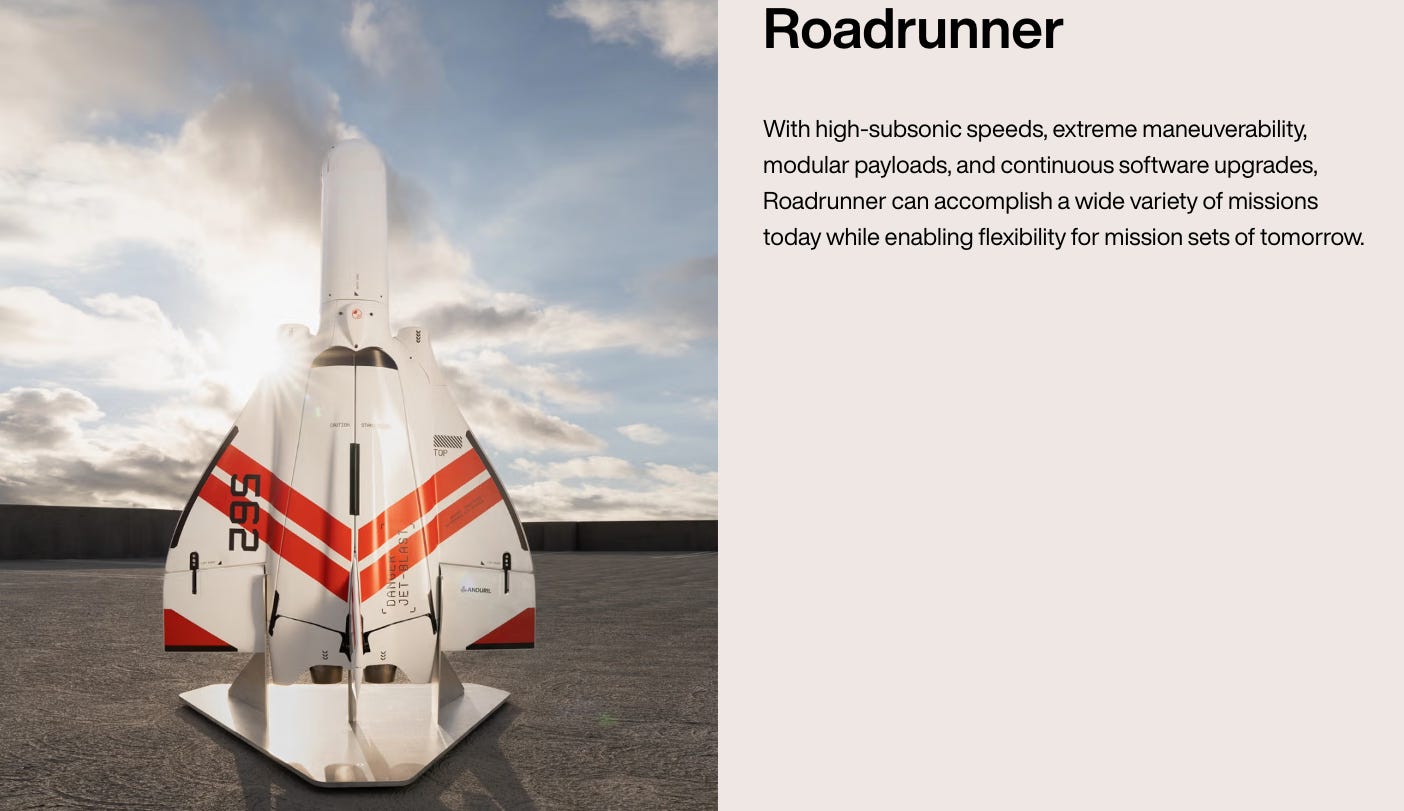
Roadrunner
Purpose: A high-speed drone designed for rapid response and interception missions.
Capabilities: Roadrunner is built for speed, making it ideal for tracking fast-moving targets or responding to emerging threats. It can quickly cover vast distances, ensuring no threat goes unaddressed.
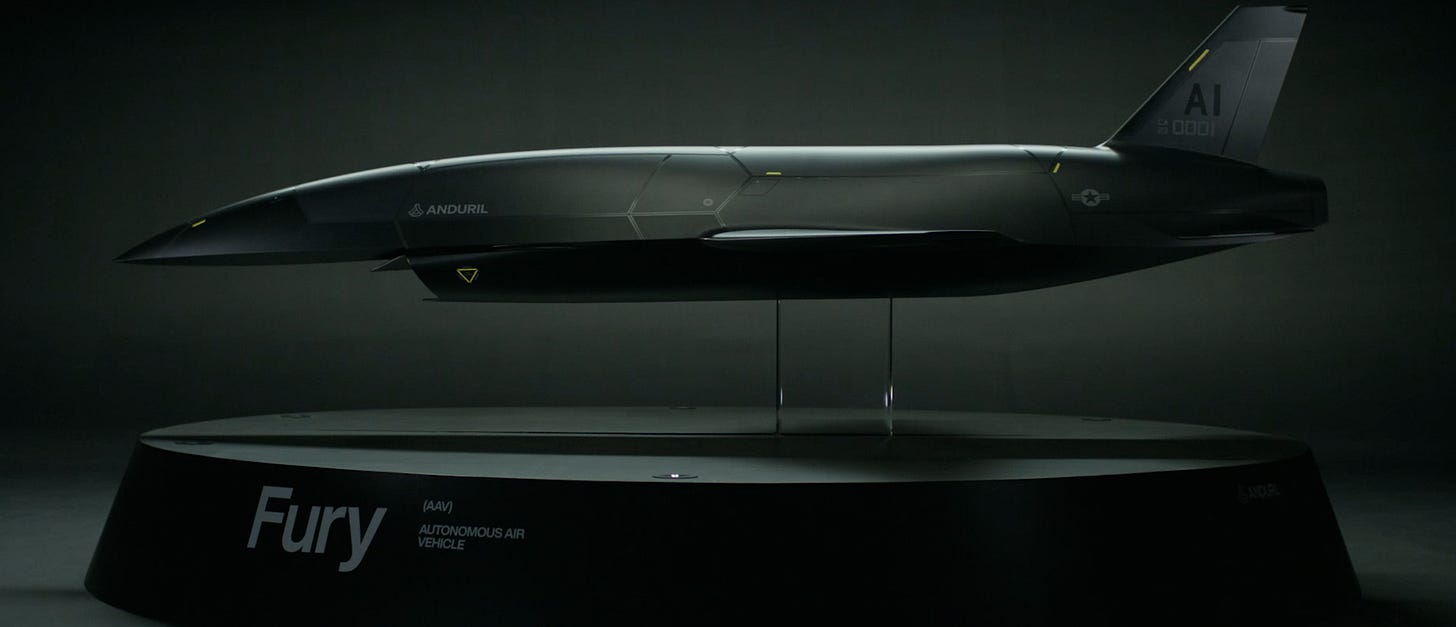
Fury
Purpose: A multi-mission drone capable of both ISR and light strike operations.
Capabilities: Fury combines surveillance capabilities with the ability to carry small payloads, such as sensors or precision munitions. This makes it a flexible ability for both reconnaissance and offensive missions.
Ghost
Purpose: A stealth drone designed for covert ISR missions.
Capabilities: Ghost operates nearly silently, making it perfect for missions requiring discretion. It can be quickly assembled and deployed, providing real-time intelligence in sensitive or high-risk environments.

ALTIUS
Purpose: A long-range, high-endurance unmanned aerial system (UAS) for extended missions.
Capabilities: ALTIUS is designed to operate for over 15 hours, making it ideal for persistent surveillance and reconnaissance. Its modular design allows it to carry a variety of payloads, from sensors to loitering munitions, enabling it to adapt to different mission profiles.

How Air Systems Work with Lattice OS
All of Anduril’s air systems are seamlessly integrated with Lattice OS, which acts as their command and control hub. For example:
Tasking: Lattice assigns specific missions to each drone, such as monitoring a high-risk area or intercepting a target.
Coordination: The system ensures that multiple drones work together efficiently, avoiding overlap and maximizing coverage.
Autonomy: Once deployed, the drones operate autonomously, using AI to adapt to changing conditions and complete their missions without constant human input.
Why Air Systems Matter
Anduril’s air systems provide a critical advantage in modern warfare by enabling persistent, autonomous surveillance and rapid response capabilities. Whether it’s securing borders, monitoring critical infrastructure, or supporting military operations, these drones ensure that operators have the intelligence they need to make informed decisions and act decisively. By combining cutting-edge hardware with the power of Lattice OS, Anduril’s air systems are setting a new standard for aerial defense and security.
Underwater Vehicles: Autonomous Solutions for Maritime Defense and Exploration
Anduril’s Underwater Vehicles are cutting-edge autonomous systems designed to operate in the most challenging maritime environments. These vehicles, powered and coordinated by Lattice OS, provide advanced capabilities for intelligence, surveillance, reconnaissance (ISR), and underwater operations. Whether for military defense, commercial applications, or scientific exploration, Anduril’s underwater vehicles are built to deliver long-endurance, high-performance solutions that redefine what is possible beneath the surface.
Key Underwater Vehicles
Dive-LD
Purpose: A long-endurance autonomous underwater vehicle (AUV) designed for deep-sea missions.
Capabilities: Dive-LD is capable of operating at depths of up to 6,000 meters, making it ideal for a wide range of missions, including:
Anti-Submarine Warfare (ASW): Detecting and tracking enemy submarines.
Mine Countermeasures: Identifying and neutralizing underwater mines.
Surveillance and Reconnaissance: Monitoring underwater activity in contested areas.
Commercial Applications: Conducting deep-water surveys and inspections for industries like oil and gas.
Unique Features: Dive-LD can autonomously launch from and return to a pier, eliminating the need for costly offshore launch platforms. Its modular design allows for the integration of various payloads, such as sonar systems and environmental sensors.

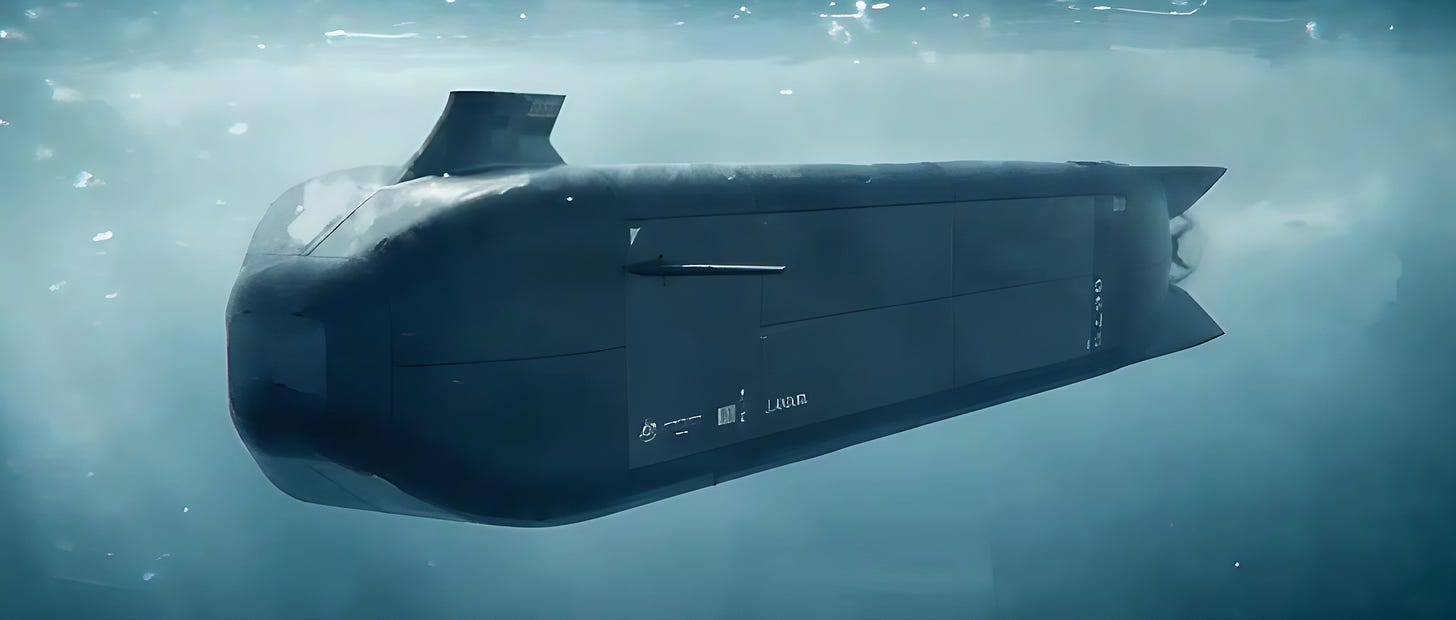
Dive-XL
The Dive-XL is an Extra Large Autonomous Underwater Vehicle (XL-AUV) with a highly configurable architecture that supports multiple large payloads and streamlined deployment for a variety of long-distance, long-duration commercial or defense missions.
Dive-XL adapts the proven modular, software-first design of Dive-LD to deliver a more producible, flexible, and upgradeable capability at a fraction of the cost of AUVs in its class.
How Underwater Vehicles Work with Lattice OS
Anduril’s underwater vehicles are fully integrated with Lattice OS, enabling seamless coordination and control. Here’s how they operate:
Tasking: Lattice assigns specific missions to the underwater vehicles, such as patrolling a designated area or scanning for underwater threats.
Real-Time Data Processing: The vehicles collect and transmit data, such as sonar readings and environmental metrics, back to Lattice OS for real-time analysis.
Autonomous Operation: Once deployed, the vehicles operate independently, using AI to adapt to changing underwater conditions and complete their missions without human intervention.
Multi-Domain Integration: Lattice ensures that underwater vehicles work in tandem with other systems, such as aerial drones and sentry towers, to provide a comprehensive defense solution.
Why Underwater Vehicles Matter
The maritime domain is increasingly contested, with adversaries leveraging advanced technologies to challenge naval dominance. Anduril’s underwater vehicles provide a critical edge by enabling persistent, autonomous operations in environments that are often inaccessible or dangerous for human operators.
From securing naval bases to conducting deep-sea exploration, these vehicles are redefining the possibilities of underwater operations. By combining state-of-the-art hardware with the intelligence of Lattice OS, Anduril’s underwater vehicles ensure that military and commercial operators can maintain control and awareness in the most challenging underwater environments.

⚡ AI-optimized, human-verified: Our expert team carefully selected Premium market intelligence from Finchat's data. Explore now →
Solid Rocket Motors: Powering Defense and Space Launch Systems
Anduril Industries has expanded its capabilities into the production of Solid Rocket Motors (SRMs), becoming a full-service, high-volume merchant supplier for both defense and space industries. These SRMs are critical components for powering missiles, defense systems, and space launch vehicles, providing the thrust needed to achieve mission success. With a focus on innovation, scalability, and performance, Anduril is setting a new standard in the production of solid rocket motors.
Key Features of Anduril’s Solid Rocket Motors
High-Volume Production
Anduril operates over 450 acres of production facilities, enabling the company to manufacture thousands of SRMs per year. This high-volume capacity ensures that Anduril can meet the growing demand for reliable propulsion systems in both military and commercial sectors.
Advanced Propellant Technology
In addition to traditional rocket propellants, Anduril has developed ALITEC, a proprietary aluminum-lithium alloy propellant.
ALITEC Advantages:
Enhances the performance of solid rocket motors.
Increases thrust efficiency and reliability.
Reduces weight, making it ideal for applications where payload capacity is critical.

Versatility
Anduril’s SRMs are designed to support a wide range of applications, including:
Defense Systems: Powering missiles and interceptors for national security.
Space Launch Vehicles: Providing the thrust needed to deliver satellites and other payloads into orbit.
How Solid Rocket Motors Fit into Anduril’s Ecosystem
Anduril’s SRMs are seamlessly integrated into its broader defense and aerospace ecosystem. For example:
Missile Defense: SRMs can be used to power interceptors that are coordinated by Lattice OS, ensuring precise targeting and rapid response to threats.
Space Operations: SRMs provide the propulsion needed for space launch systems, supporting Anduril’s vision of expanding its capabilities into the space domain.
Why Solid Rocket Motors Matter
Solid rocket motors are a cornerstone of modern defense and space exploration. Their reliability, simplicity, and high thrust-to-weight ratio make them indispensable for a wide range of missions. By entering the SRM market, Anduril is addressing a critical need for scalable, high-performance propulsion systems while leveraging its innovative approach to manufacturing and materials science.
Market Dynamics
Anduril operates in a massive and growing market. The U.S. DoD alone spends over $450 billion annually on procurement, with additional opportunities in allied military spending and commercial critical infrastructure security.
Customer Base
85% U.S. Military: Anduril’s primary customers include the DoD, SOCOM, and Customs and Border Protection (CBP).
10% Allied Militaries: Anduril serves NATO allies, including the UK and Australia.
5% Commercial: Critical infrastructure clients, such as oil and gas companies, use Anduril’s technology for security and monitoring.
Competition
Anduril faces competition from both traditional defense contractors and emerging startups.
Traditional Contractors
Lockheed Martin and Raytheon dominate the industry but are slow to innovate. For example, Lockheed spends only 1.8% of its revenue on R&D, compared to Anduril’s 30%.
Startups
Shield AI: Focuses on AI pilots and unmanned systems but lacks Anduril’s full-stack integration.
Rebellion Defense: Specializes in battlefield software but does not offer hardware solutions.
Anduril’s key advantage is its vertically integrated model, which combines software, hardware, and AI into a cohesive ecosystem.
Business Model
Anduril’s business model is a radical departure from the defense industry norm. Instead of relying on cost-plus contracts, the company self-funds its R&D and sells completed products through fixed-margin contracts. This approach allows Anduril to move faster and deliver better value to its customers.
Key revenue streams include:
Software Licensing: Lattice OS generates recurring revenue through monthly licenses.
Hardware Sales: Products like Ghost Drones and Sentry Towers are sold as standalone systems.
Outcome-Based Contracts: Anduril is rewarded for achieving specific mission outcomes, such as reducing border breaches.
Anduril’s growth has been nothing short of remarkable:
2019: $10 million in revenue within 20 months of founding.
2021: $150 million in revenue, driven by contracts with the DoD and CBP.
2024: $1 billion in projected revenue, with a $1.5 billion contract backlog.
Major contracts include:
A $967 million SOCOM deal for counter-drone systems.
A $100 million contract with the Australian Navy for Dive-LD.

Valuation
Anduril has raised over $2 billion in funding, with its latest round valuing the company at $14 billion. Key funding milestones include:
2018: $41 million Series A at a $250 million valuation.
2021: $450 million Series D at a $4.6 billion valuation.
2024: $1.5 billion Series F at a $14 billion valuation.
2025: $2.5 billion Series G at a $28 billion valuation (in talks, not confirmed yet)
After diving deep into Anduril's journey, technology, and vision, you might think you've had enough. But if you're still curious (and perhaps slightly obsessed like we are), there's one more gem worth your time. Emily Chang's masterful interview with Palmer Luckey offers a fascinating window into the mind behind Anduril. The conversation expands beyond what we've covered here, offering raw insights into Luckey's perspective on AI warfare and the future of defense technology.
In this candid discussion, you'll get to "feel" – beyond just the facts and figures we've discussed – how Anduril's founder envisions the evolution of modern warfare and defense systems. It's one thing to read about technology and business strategy, but watching Luckey articulate his vision adds a compelling human dimension to the story. Fair warning: the interview runs about 30 minutes, but for those intrigued by the intersection of AI, defense, and entrepreneurship, it's time well spent.
After all, what's another half hour when you've made it this far, right? 😉
The Circuit Episode - Bloomberg Originals, Interview by Emily Chang, written by Lauren Ellis - YT version here
Questo pezzo era gratuito. Il prossimo arriva domenica.This piece was free. The next one lands on Sunday.
Dieci nomi con i livelli, la lettura del mercato, la chat con le posizioni in diretta. Con l'abbonamento leggi tutto; senza, ricevi la parte gratuita via email.Ten names with their levels, the market read, the chat with live positions. Subscribers read everything; free readers get the free part by email.