
Inside The Trade Desk (TTD) 📊🖥️
Inside The Trade Desk (TTD)
Company Overview: Who is The Trade Desk and What Do They Do?
The Trade Desk, Inc. (TTD) is a key player in the digital advertising industry despite being lesser-known outside professional circles. Established in 2009 by Jeff Green and Dave Pickles in Ventura, California, The Trade Desk has become an essential component of the programmatic advertising landscape, significantly influencing how digital ads are delivered to consumers globally.
Central to The Trade Desk's impact is its demand-side platform (DSP), a highly advanced system crucial for executing data-driven ad campaigns. This platform functions like an intelligent media buying engine, assessing and purchasing billions of ad impressions across the internet within milliseconds—faster than a blink of an eye. Utilizing sophisticated machine learning algorithms, it evaluates these opportunities with exceptional accuracy.
What distinguishes The Trade Desk is its expertise in omnichannel programmatic advertising—a groundbreaking method perfected over years with substantial investment. Their technology allows advertisers to engage consumers through connected TV, audio, mobile devices, display ads, and social media with unmatched targeting precision and transparency. Imagine having personalized interactions with millions of potential customers simultaneously; each receives a custom message at precisely the right time.
Replicating The Trade Desk's achievements is extremely challenging. During peak times, their platform processes over 11 million ad impressions per second while analyzing numerous data points for real-time bidding decisions. Over more than ten years, they have developed an extensive ecosystem linking thousands of publishers and data partners—a network meticulously crafted for optimal performance.
With its cutting-edge technology and independent stance within digital advertising, The Trade Desk plays a pivotal role in shaping the future of programmatic advertising. It remains one of the most vital yet underrecognized companies within the global marketing technology sector.
A quick note from the GBC Team:
We have decided to discontinue the free trial to concentrate on delivering the highest value to those who genuinely appreciate the time and effort we invest in our work.
With at least one comprehensive deep dive each week, real-time portfolio management updates, detailed follow-ups within 24 to 48 hours, and 24/7 support with a response time of 2 to 3 hours, we are dedicated to fully supporting our subscribers.
For this week only, we are offering a 20% discount on our yearly plan, ensuring this price is locked in forever before future increases.
Join us now and become part of a community that values quality and dedication.
Key Markets & Offerings
The Trade Desk is a powerful advertising platform designed to help brands effectively reach their audiences across the digital landscape. Here's what makes it special, explained in straightforward terms.
Omnichannel Advertising
The Trade Desk's omnichannel advertising platform enables advertisers to reach audiences seamlessly across multiple channels, including Connected TV (CTV), online video, audio, display, mobile, and digital out-of-home (DOOH). This approach ensures that campaigns are not siloed but instead integrated across devices and media types, providing a cohesive consumer experience. The platform's flexibility allows advertisers to optimize their strategies in real time and leverage the growing convergence of traditional and digital media, particularly in high-growth areas like CTV and mobile.
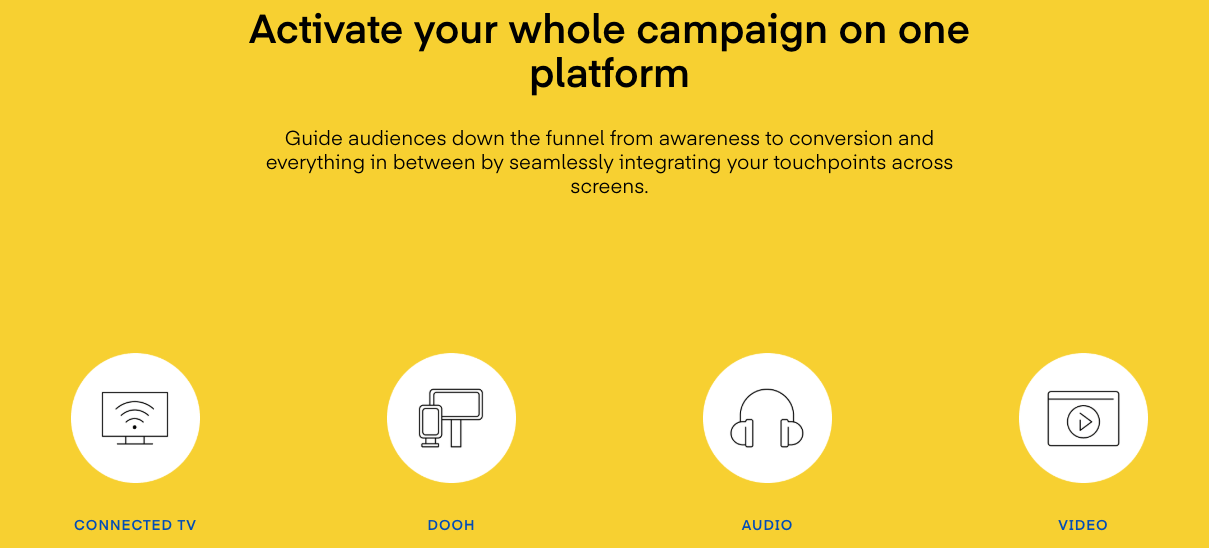
It means you can run ads everywhere people consume content—streaming TV, websites, mobile apps, audio platforms, and digital billboards—all managed from one place. Unlike platforms like Google or Facebook that primarily show ads on their properties, The Trade Desk connects you to the entire internet.
Audience Targeting
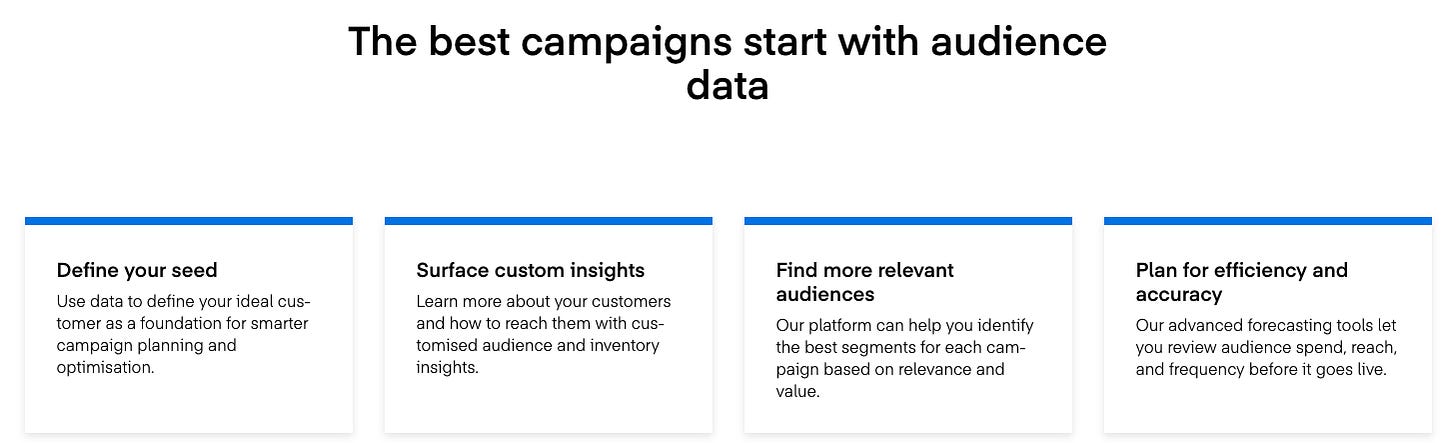
Audience targeting is a core pillar of The Trade Desk's offerings, leveraging advanced data analytics and machine learning to help advertisers identify and engage with their most valuable audiences. By utilizing first-party, third-party, and proprietary data sources, the platform enables precise targeting based on demographics, behaviors, and preferences. This capability ensures that ad spending is directed toward the right consumers at the right time, improving campaign effectiveness and ROI.
Identity Solutions
The Trade Desk's identity solutions rely on Unified ID 2.0 (UID2), an open-source framework offering a secure, privacy-conscious alternative to third-party cookies. UID2 allows advertisers to manage identity across devices and platforms, maintaining transparency and user control. This solution works with other identity frameworks and is governed independently to foster trust within the advertising ecosystem. By prioritizing privacy compliance and security, The Trade Desk positions itself as a leader in the evolving landscape of digital identity.
APIs and Custom Solutions
The platform offers robust APIs and custom solutions that allow advertisers to tailor their programmatic strategies to specific needs. These tools enable seamless integration with existing systems and workflows, providing flexibility for agencies and brands to build proprietary advantages. This customization capability supports innovation and differentiation in an increasingly competitive market.
Measurement and Optimization
Measurement and optimization are central to The Trade Desk's value proposition. The platform offers granular reporting with over 300 measurable variables. Advertisers can track key performance indicators such as impressions, reach, frequency, conversion rates, and sales lift across channels. The platform's advanced analytics tools empower users to refine their campaigns continuously by identifying areas for improvement and maximizing efficiency.
Solutions for Programmatic Buyers
The Trade Desk offers specialized tools for programmatic buyers, enhancing decision-making with expressive bidding strategies. Unlike traditional line-item approaches, the platform uses bid factors for detailed campaign customization. This feature ensures advertisers achieve precise targeting and benefit from transparent campaign performance reporting.
Partnerships
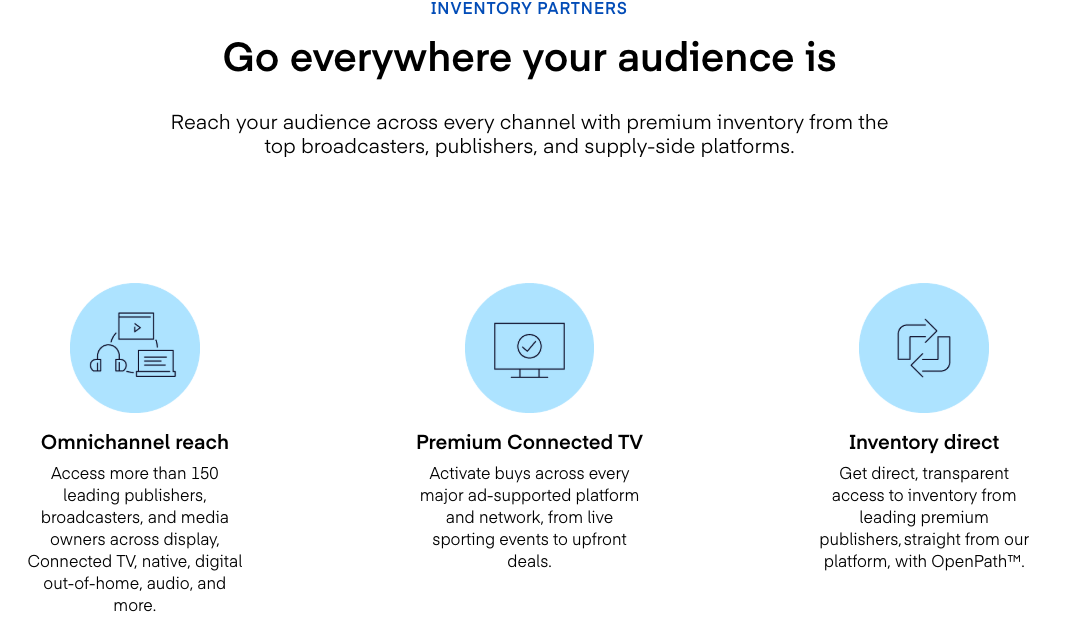
Partnerships play a crucial role in The Trade Desk's ecosystem. The company collaborates with data providers, publishers, agencies, and technology platforms to create a comprehensive advertising network. These partnerships expand the platform’s capabilities by integrating high-quality data sources and enabling access to premium inventory across channels. This collaborative approach fosters innovation while ensuring advertisers have access to the best tools available in the market.
What Sets The Trade Desk Apart from Google and Apple's Closed Systems
The Trade Desk (TTD) fundamentally differentiates itself from tech giants like Google and Apple through its open, independent approach to digital advertising—a stark contrast to the "walled gardens" these larger companies have built.
Open vs. Closed Ecosystems
The Trade Desk operates on the principle of openness and interoperability. Unlike Google and Apple, which primarily direct advertisers to their properties and platforms, TTD provides access to virtually the entire open internet. This means advertisers can reach audiences across thousands of websites, apps, and streaming platforms without being confined to a single company's ecosystem.
Google and Apple function as "walled gardens" where:
They control both the advertising technology and the media properties where ads appear
They restrict data sharing outside their ecosystems
They limit transparency in performance metrics and audience data
They act as both the marketplace operator and a participant in that marketplace
🌱 Support Our Work: Buy Us a Coffee or Shop Our Services! 🌱
Your small gesture fuels our big dreams. Click below to make a difference today.
[☕ Buy Us a Coffee]
[🛒 Visit Our Shop]

1. 🏰 Strong Competitive Advantages (Moat)
Advanced Technology Platform
The company has developed a cutting-edge technology platform that distinguishes it from its competitors. Central to this platform are advanced algorithms and machine learning systems that continuously enhance advertising performance. It functions as an intelligent system, learning from each advertising campaign it manages. When an advertiser seeks to display an ad online, The Trade Desk's technology swiftly evaluates thousands of potential ad placements within milliseconds, identifying those most likely to engage the right audience at the optimal time.
This real-time bidding capability ensures advertisers efficiently allocate their budgets by avoiding ads for uninterested audiences. Unlike traditional methods of purchasing ad space in advance with uncertain outcomes, The Trade Desk empowers advertisers to make immediate decisions based on current Internet browsing activity.
Additionally, the platform excels in collecting and analyzing data regarding user interactions with ads and online content. This process creates a feedback loop that gives advertisers valuable insights into audience preferences, behaviors, and interests. For instance, an advertiser might learn that their target demographic is more responsive to video ads during evening hours or shows particular interest in specific topics. These insights enable more personalized and effective advertising campaigns tailored directly to what potential customers value most.
TTD’s data-driven optimization tools and multi-channel capabilities (display, video, audio, CTV) create switching costs for agencies managing complex campaigns. The company’s 95% client retention rate over the past decade underscores platform stickiness.
Independent and Objective Position
The Trade Desk's major advantage is its status as an independent platform. Unlike Google and Meta, it doesn't own content or media properties, allowing it to help advertisers find optimal ad placements across the open internet without bias.
Operating solely on the "buy side," The Trade Desk focuses on representing advertisers, avoiding conflicts of interest inherent in platforms that also serve publishers.
Transparency is crucial to its approach. While many platforms are opaque about spending and ad placement, The Trade Desk offers detailed insights into campaigns, showing where ads appeared, costs incurred, viewer interactions, and responses. This transparency fosters trust and enables advertisers to refine their campaigns based on clear data rather than guesswork.
Strong Position in Connected TV (CTV)
Connected TV refers to internet-delivered television content via streaming services like Netflix, Hulu, or YouTube TV. As viewers shift from traditional TV to these services, advertising dollars are following, with The Trade Desk emerging as a leader in this transition.
Connected TV has become its fastest-growing advertising channel, reflecting the shift from scheduled cable programming to on-demand streaming. Unlike search (dominated by Google) or social media advertising (led by Meta), the Connected TV market is fragmented among various platforms and providers. This fragmentation benefits The Trade Desk by allowing it to offer access to diverse CTV inventory across multiple platforms. Individual advertisers may struggle with negotiations across different services, but The Trade Desk simplifies audience targeting.
As budgets move from traditional television to Connected TV, The Trade Desk stands to gain significantly through its investments in relationships with major streaming platforms and technology tailored for CTV advertising.
2. 📈 Consistent Growth
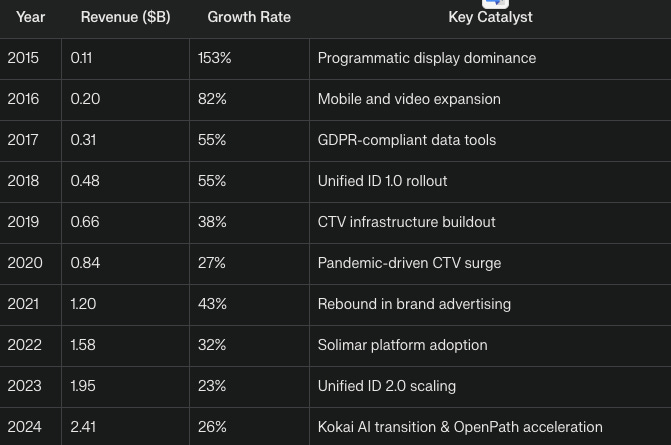
Revenue rose from about $114 million in 2015 to $2.445 billion in 2024. That is roughly 40.6% annual compound growth across nine years.
TTD’s revenue growth has outpaced the digital advertising market for a full decade, demonstrating resilience through macroeconomic turbulence:
2024 Growth Challenges and Mitigation
While TTD delivered 26% revenue growth for the full year, Q4 results fell short due to:
Reorganization Friction: December’s operational restructuring temporarily slowed client onboarding cycles.
Product transition: Moving clients from Solimar to Kokai adds execution risk.
Management addressed these through:
Agile development: Management described nearly 100 small engineering teams to speed up product delivery.
Brand relationships: Management is putting more emphasis on working directly with advertisers.
Future Growth Levers
1. AI-Driven Advertising Ecosystem
Kokai uses machine learning to help advertisers assess impressions and adjust bids.
Bid optimization: Kokai uses campaign signals to guide bidding decisions.
Inventory quality: The platform helps buyers evaluate the quality of the impressions offered.
2. Supply Chain Cleanup via OpenPath
Disney integrated DRAX Direct with OpenPath in March 2024, opening a direct buying path to Hulu and Disney+ inventory.
3. Global Expansion
International expansion remains an opportunity, but it also exposes the business to different markets, currencies and regulatory requirements.
Client retention, Connected TV and Kokai support our growth thesis. Sustaining growth above 20% through 2030 remains an investment assumption.

3. 💹 High Return on Equity (ROE)
For 2024, net income divided by average opening and closing equity gives a ROE of about 15.4%.
Technology and development expense was $463.3 million in 2024. This covers the technology function, not Kokai alone.
Key ROE elements:
2024 ROE of about 15.4%, using average equity
Kokai uses AI to support media buying
OpenPath connects advertisers directly with participating publishers
4. 🏦 Low Debt Levels
At year-end 2024, cash and equivalents were $1.369 billion, plus $552 million in short-term investments. No credit-facility borrowings were outstanding.
This liquidity provides financial flexibility. Dividing it by R&D expense alone does not establish how long the company can fund all its operations.
The financial terms of the Sincera acquisition were not disclosed. Separately, year-end shares outstanding rose about 1.5% during 2024, not 1.3% since the IPO.
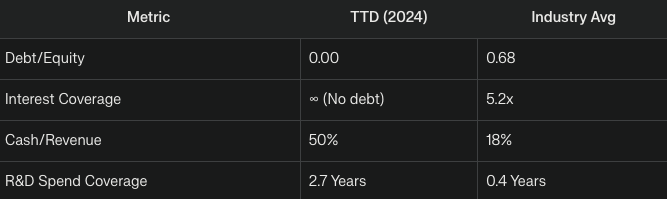
Key financial strength indicators:
No outstanding credit-facility borrowings at year-end 2024
Cash plus short-term investments of about $1.92 billion
Sincera acquisition with undisclosed financial terms
Year-end share count up about 1.5% during 2024

Put the market on autopilot, experience the Best Platform with TC2000
Explore now →
5. 📜 Proven Track Record
The Trade Desk distinguishes itself through timely strategic decisions ahead of market trends. When they launched, programmatic advertising was nascent, while competitors focused on display ads. CEO Jeff Green foresaw that all advertising would become digital and programmable, leading to a versatile platform for multiple formats across the open internet.
The company has shown resilience during market challenges. In 2020, as ad budgets were cut globally due to the pandemic, The Trade Desk remained profitable and invested in its next-generation platform. Following Google's announcement to phase out third-party cookies, it accelerated developing Unified ID 2.0, a widely adopted industry identity solution. Instead of being disrupted by these changes, The Trade Desk consistently emerged stronger.
Key historical achievements:
Successfully navigated multiple industry disruptions, including the third-party cookie deprecation
Pioneered the development of Unified ID 2.0, now an industry standard for identity resolution
Maintained 95%+ client retention rate for over seven consecutive years
Early strategic positioning in Connected TV, now their fastest-growing channel
Consistent profitability since 2012 while maintaining aggressive growth investments
6. 🌍 Strong Market Position
Their position as the premier demand-side platform for advertisers has created a powerful network effect that strengthens each quarter. As more advertisers adopt their platform, The Trade Desk gains access to more data, enabling better optimization and attracting even more advertising spend in a virtuous cycle.
What truly distinguishes The Trade Desk's market position is its independence in an industry increasingly controlled by walled gardens. While Google, Meta, and Amazon operate platforms serving their interests, The Trade Desk remains solely focused on advertisers, creating a level of trust and alignment competitors cannot match.
The Trade Desk has positioned itself as the strategic partner of choice for sophisticated marketers. Their platform now influences how many of the world's largest advertisers allocate billions in media spending, giving The Trade Desk extraordinary visibility into future advertising trends and allowing them to shape the industry's direction.
7. ⭐ Quality Management
The Trade Desk's leadership exemplifies visionary technology leadership and disciplined execution. Founder and CEO Jeff Green has led the company since 2009 with a consistent vision shaped by his background as a digital advertising pioneer. His emphasis on long-term value over quarterly results allows for bold investments while maintaining financial discipline.
Laura Schenkein joined The Trade Desk in 2014 and became CFO in June 2023. Co-founder Dave Pickles stepped down as CTO in September 2023 and continued as a long-term adviser.
Management invests in technology while preserving financial flexibility. Stock-based compensation also creates a cost for shareholders and should be assessed alongside buybacks and changes in the share count.
Additionally, the team's commitment to transparency sets them apart. In earnings calls and industry forums, they provide detailed insights into strategy and market outlooks while addressing challenges directly—building credibility with investors and partners. This transparency fosters confidence among advertisers in developing long-term strategies around The Trade Desk's platform.
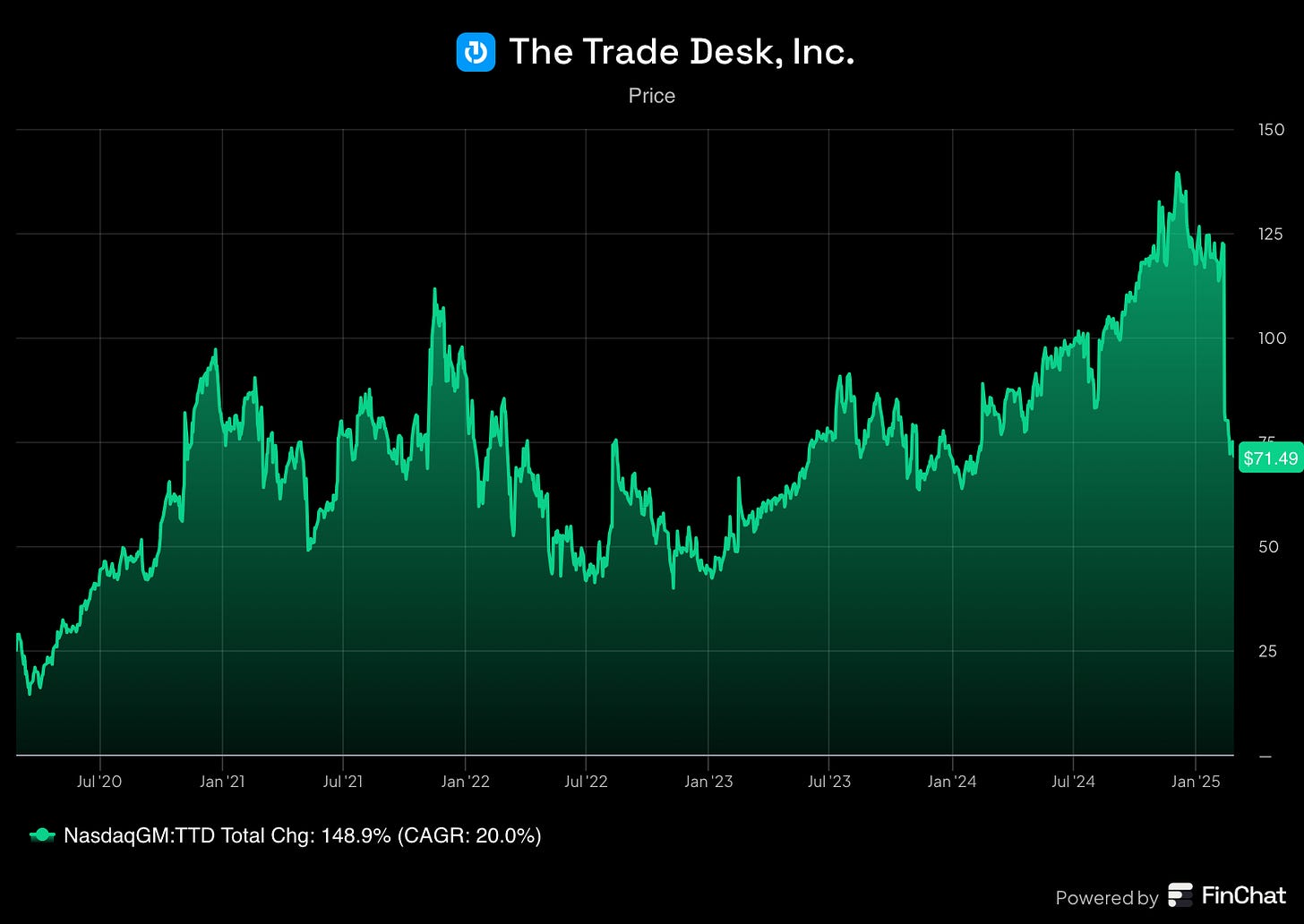
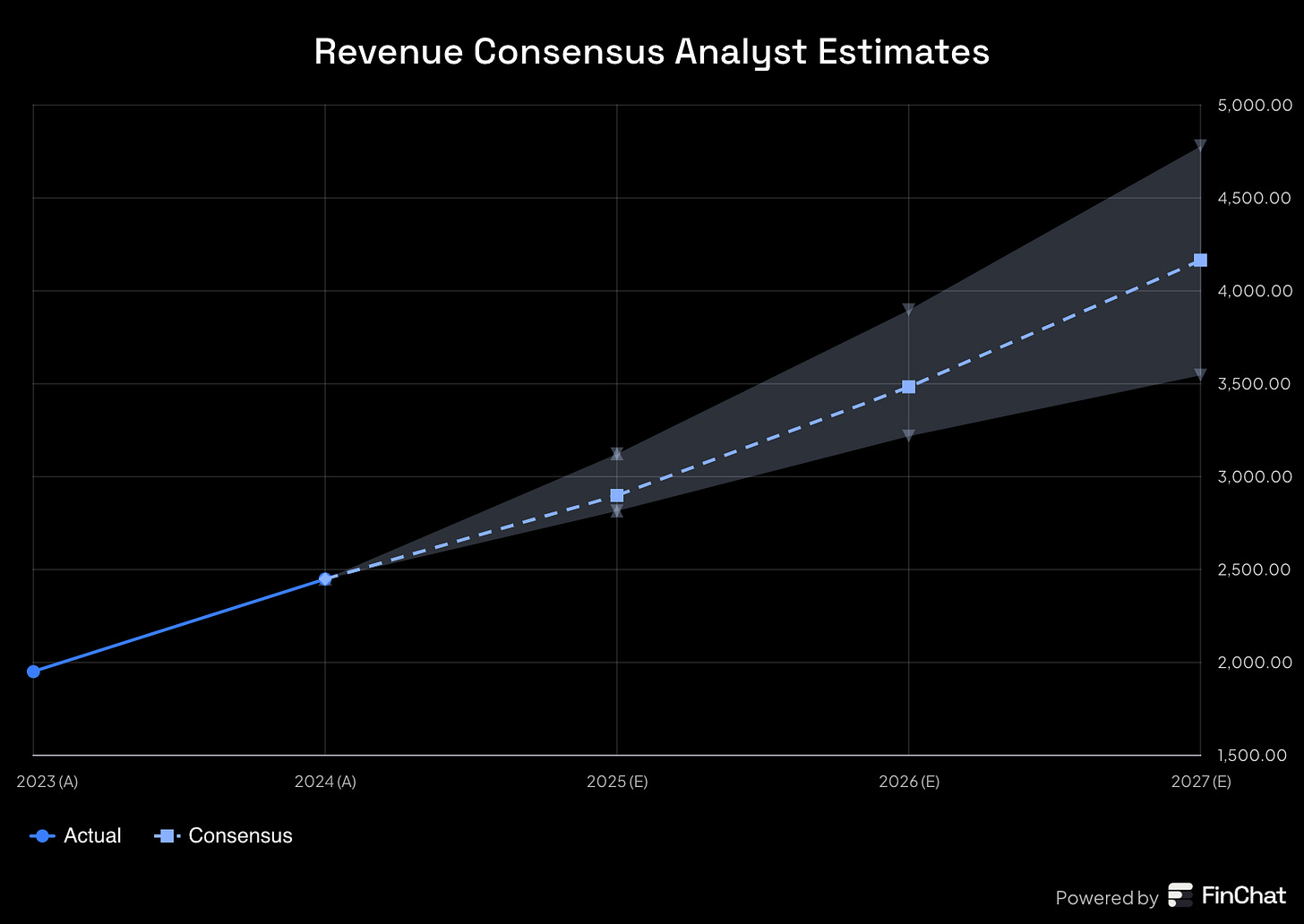
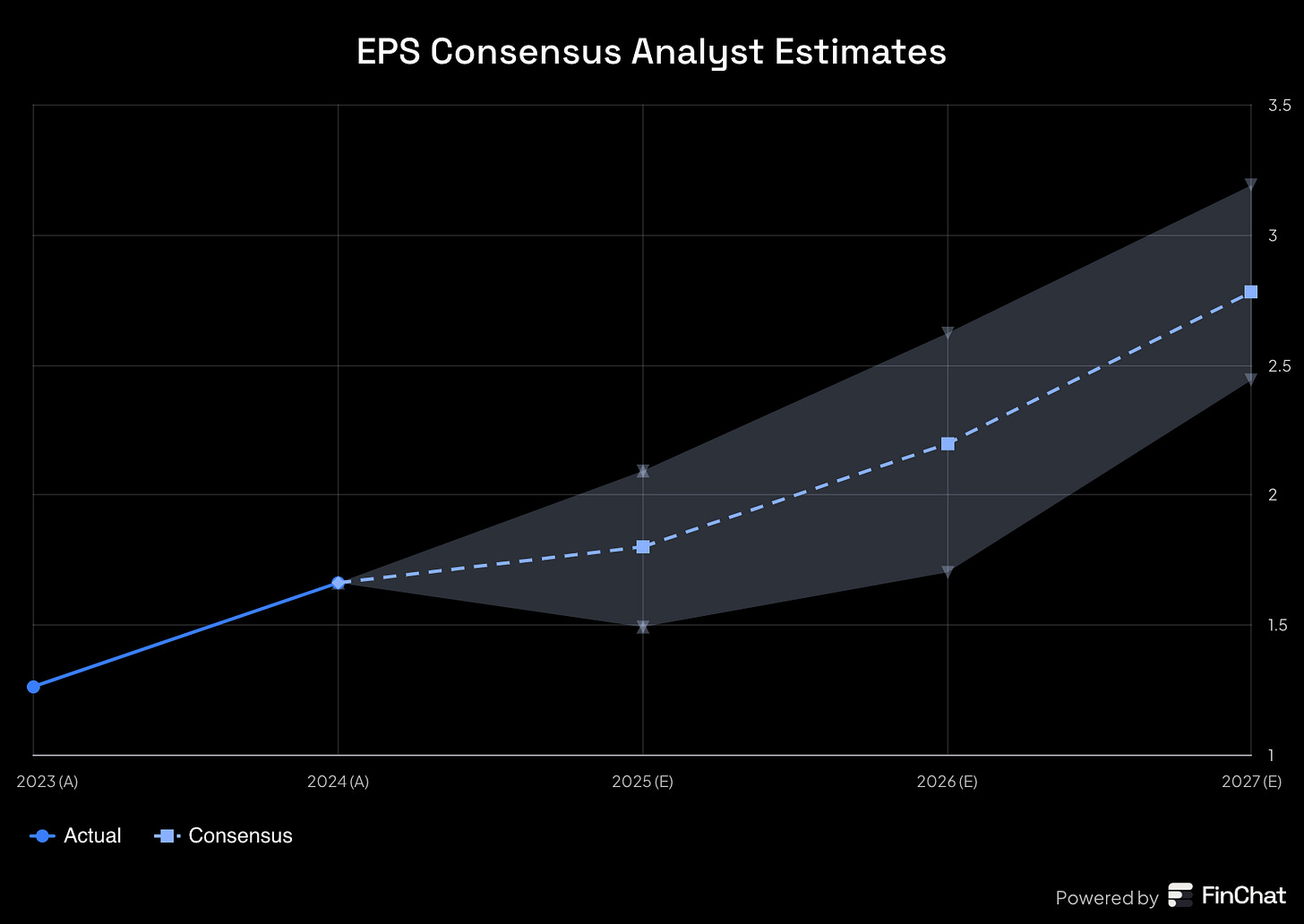
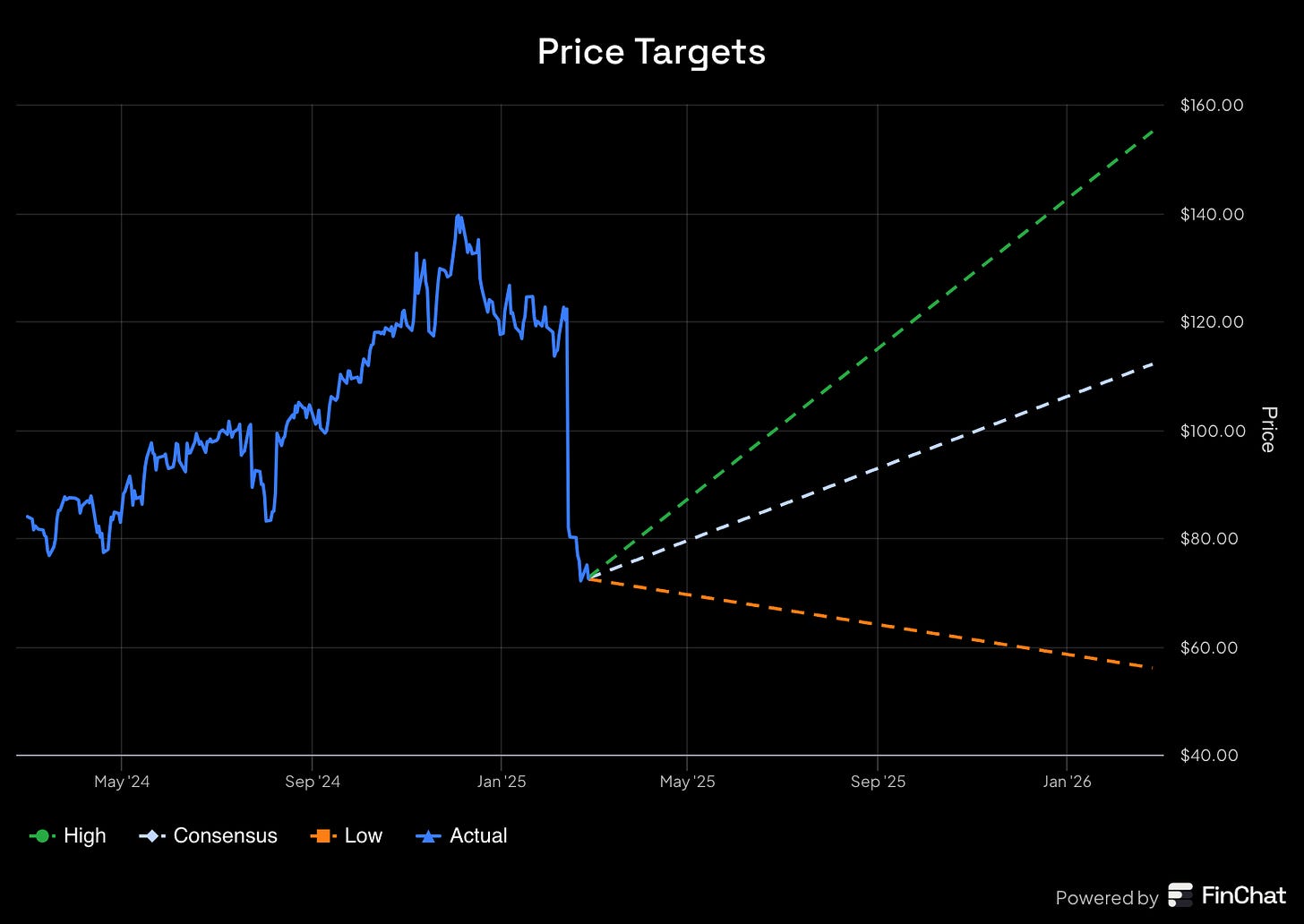

⚡ AI-optimized, human-verified: Our expert team carefully selected Premium market intelligence from Finchat's data. Explore now →
Key Risks or Uncertainties
1. Platform Transition Challenges
Moving clients to Kokai requires product development, training and continued support for existing campaigns. Delays or a poor migration experience could frustrate clients or lead them to leave.
2. Concentration in Connected TV Partnerships
Access to streaming inventory depends on agreements with publishers and platforms. Changes to those agreements or competing buying tools could reduce the inventory available through The Trade Desk.
3. Economic Sensitivity and Small Business Exposure
Advertising budgets are sensitive to economic conditions. Agencies and advertisers can reduce spending when business weakens.
4. Valuation Considerations
The Trade Desk consistently trades at premium valuation multiples compared to both the broader market and other advertising technology companies. Current valuation metrics reflect expectations for continued high growth and margin expansion. The stock's elevated multiples leave little room for execution missteps or growth deceleration, as the last earnings report indicated. Any disappointment in revenue growth, client retention, or profitability could trigger significant multiple compression. This high valuation makes the stock particularly vulnerable to market volatility and changing investor sentiment toward growth companies.
Through a long-term "Coffee Can Portfolio" lens, The Trade Desk presents a compelling investment case despite these risks. The company's fundamental strengths including:
Leading position in programmatic advertising
Strategic importance in the Connected TV revolution
Strong financial profile with zero debt
Visionary management team
Consistent innovation track record
Entry Strategy Recommendation
The Trade Desk (TTD) has experienced a valuation reset after its recent earnings report, presenting a substantial opportunity for long-term investors to buy at better prices. As of April 2025, with significant indices 20%+ down from their highs, further market corrections could provide even more favorable entry points for quality growth companies.
For individuals interested in investing in TTD, a disciplined three-tranche accumulation strategy is advisable, focusing on key technical support levels. The initial allocation can be made at the current price level of approximately $45.00, which is considered favorable. The second tranche should be allocated at the next weekly support level, around $40.00 - $41.00. If the stock further declines and breaks below the $40.00 mark, the final tranche can be allocated around the $35.00 level for optimal positioning.
These targets are based on technical analysis rather than fundamental metrics and serve as guidelines for systematic accumulation rather than precise valuations.
Investors should tailor their decisions to overall market conditions and personal investment timelines. This approach suits "Coffee Can Portfolio" investors aiming for multi-year or multi-decade holds; temporary price drops represent opportunities for them—lower acquisition prices can lead to greater long-term returns from this industry leader.
Questo pezzo era gratuito. Il prossimo arriva domenica.This piece was free. The next one lands on Sunday.
Ogni domenica analizziamo fino a dieci titoli e pubblichiamo la lettura del mercato. L’abbonamento include tutte le analisi, i livelli operativi e le nostre posizioni in diretta nella chat. La parte gratuita arriva via email.Every Sunday, we analyze up to ten stocks and publish our market view. A subscription includes the full research, price levels and our live positions in the chat. The free section arrives by email.