

Wall Street Radar: Stocks to Watch Next Week
💼 Volume 88

One Position Left Standing
Some weeks you lose the battle. This was one of them.
The context was already uncomfortable going in. A market running hot, volatility biting harder than usual on anything with real amplitude in its daily range, and a growing sense that the setups worth taking were getting harder to find at these levels.
We had pulled back. Deliberately.
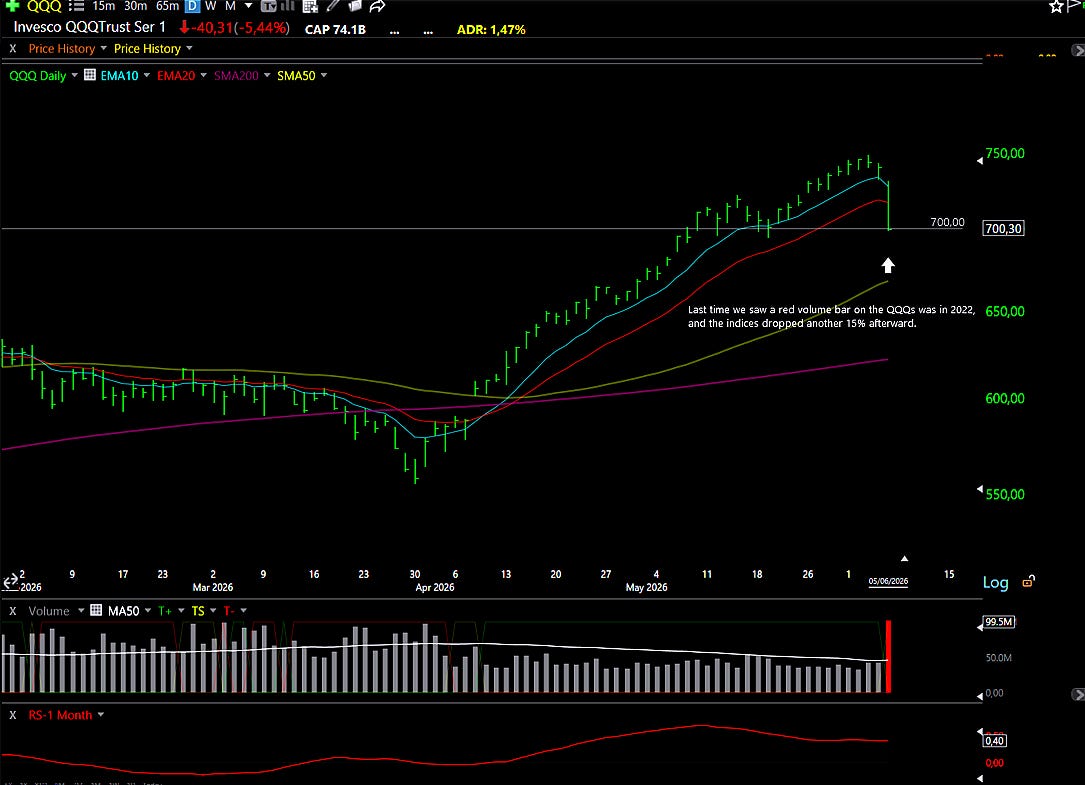
And on Friday, while we were away from the screens for work, the Nasdaq dropped over four percent in a single session. Its worst single day since April 2025.
The S&P 500 shed 2.6%, snapping a nine-week winning streak, the longest the index had strung together in years. The trigger was not a geopolitical shock or an earnings disaster. A stronger-than-expected jobs report pushed bond yields sharply higher and rekindled fears that the Federal Reserve will be forced to raise interest rates before the year is out.
Markets priced it fast and with no mercy.
We came back to the portfolio and found what we expected: almost everything gone. The stops we run when we are away from the desk did exactly what they were supposed to do, which is a sentence that sounds straightforward until you actually live through the session that triggers them.
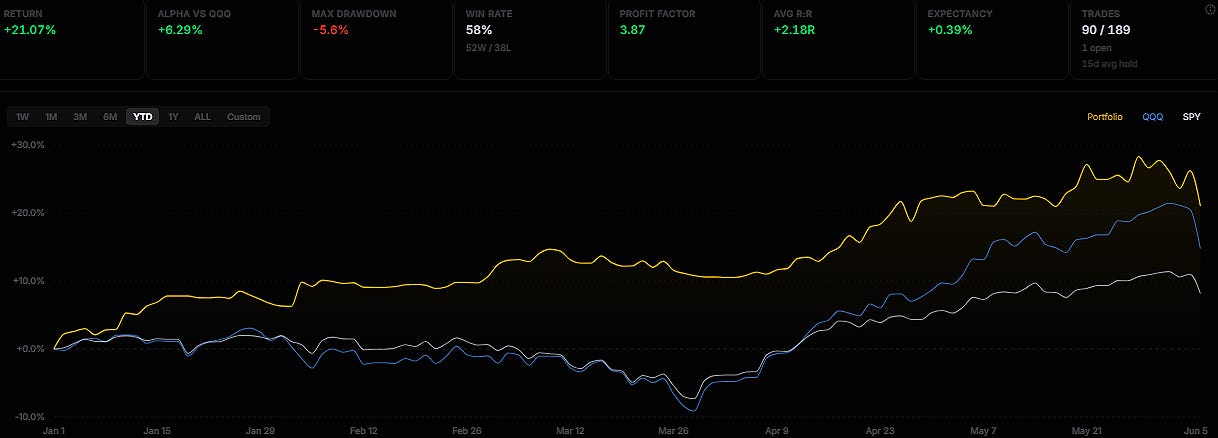
One position had a stop in profit and closed the day significantly lower than where it was taken out. Others were clean losses. None of this felt good. But the math told a different story: relative to the index, we lost less.
Against a Nasdaq down over four percent on the day, that gap in performance matters more than the absolute number.
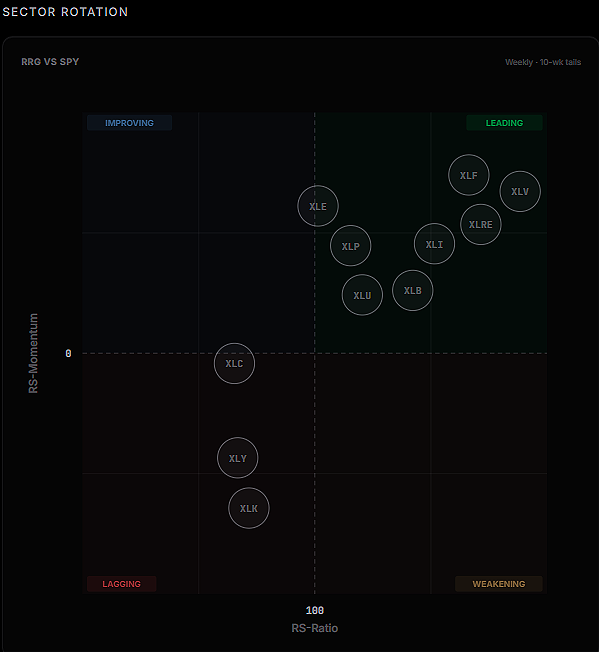
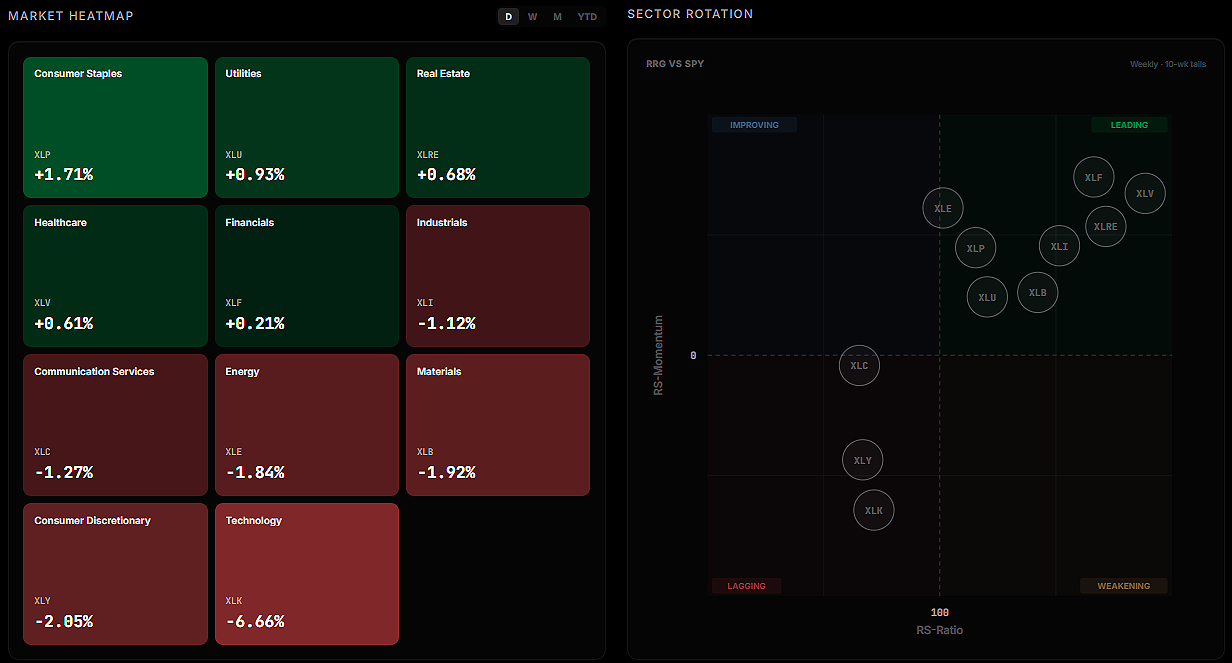
Here is the thing about momentum and growth portfolios that does not get said enough. The sell-off on Friday was not uniform. Healthcare and Staples held up while tech was being dismantled. Colgate-Palmolive (CL) added four percent. Coca-Cola gained three (KO). Johnson and Johnson (JNJ) was up two.
An aggressive growth portfolio with concentrated tech exposure could have lost fifteen, eighteen, or twenty percent in a single session without anyone exaggerating. That kind of day does not feel theoretical when you are watching it happen in real time.
The weeks before Friday, when we were slowing down and second-guessing ourselves, when our style felt slightly out of sync with a market that kept locking up and grinding higher in ways that made our entries awkward, it turns out that discomfort was doing work. The discipline to reduce exposure when things do not feel right is easy to undervalue in a bull market.
It pays in moments like this one.
There is one thing that prevents this from being a completely dark read.
Not everything went down together on Friday. We have identified at least two or three industries that spent the session consolidating rather than collapsing. A handful of names on the watchlist closed the day positive or flat while tech was being sold aggressively. Whether that resilience reflects genuine capital rotation or simply a delay before the same selling pressure arrives, we do not know yet. The next few sessions will answer that question.
Our single surviving position is holding its ground. We are watching it closely.
Fasten your seatbelts. This is where things get interesting
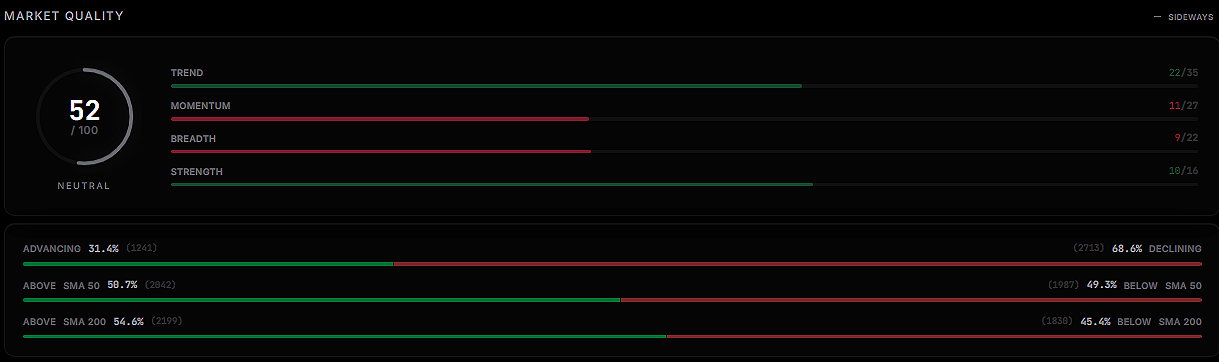
Here’s a look at this week’s market health, with a breakdown of index and sector performance.

We’re currently building the beta version of our app, and it’s already live.
It is not a generic solution for every market participant, but a platform built specifically for swing trading, momentum strategies, and short to medium-term investing.
You can already sign up, access the beta, and start using it today.
As previously stated, all paid subscribers will receive full access to the platform at no additional cost.

Latest articles:


Each stock carries a risk badge: ⚠️ High | 📊 Medium | 🛡️ Low.
Based on volatility, float, technicals, and fundamentals. Size your positions accordingly.
📈 Free Setup: Make It Count
GTLB: GitLab Inc 📊
What they do: A software platform that manages the entire development lifecycle
Why watch? GitLab operates in a space that sounds mundane until you understand what is actually happening inside it. DevOps platforms are the infrastructure layer through which every line of enterprise software gets written, reviewed, tested, and shipped. When that layer starts absorbing AI and agentic workflows, usage data accelerates in ways that simple seat-count metrics miss entirely.
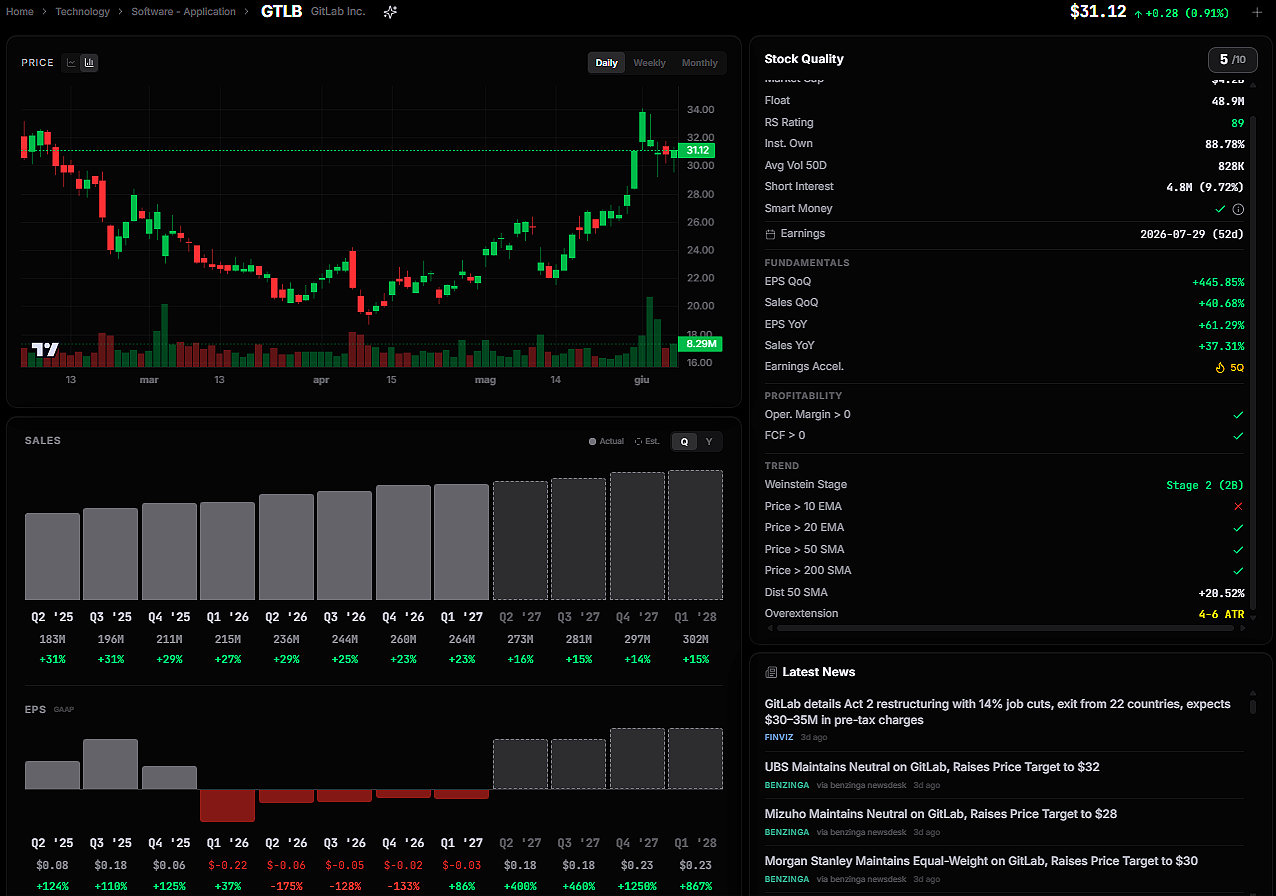
Q1 revenue grew 23% year over year to $264 million, beating expectations by four percentage points and holding exactly flat with the prior quarter’s growth pace. For a company that had previously signaled macro headwinds, maintaining that rate rather than decelerating was the move no one expected. The CEO’s commentary on the call was more interesting than the headline. Code pushes across the paid SaaS customer base are up 49% year over year. CI pipeline growth, which measures how frequently customers are running automated build and test processes, accelerated from the mid-twenties in late 2025 to 38% in April. One of GitLab’s most advanced agentic customers grew the total volume of code in their repositories by two and a half times in six months, and the growth is still accelerating. These metrics measure actual usage intensity, and they are going up fast.
The company also introduced GitLab Flex, a program allowing customers to purchase both traditional seats and usage credits in combination. Consumption-based models tend to expand revenue naturally as usage grows, without requiring a separate sales conversation every time a customer does more. It removes friction from the monetization path at exactly the moment when usage is accelerating.
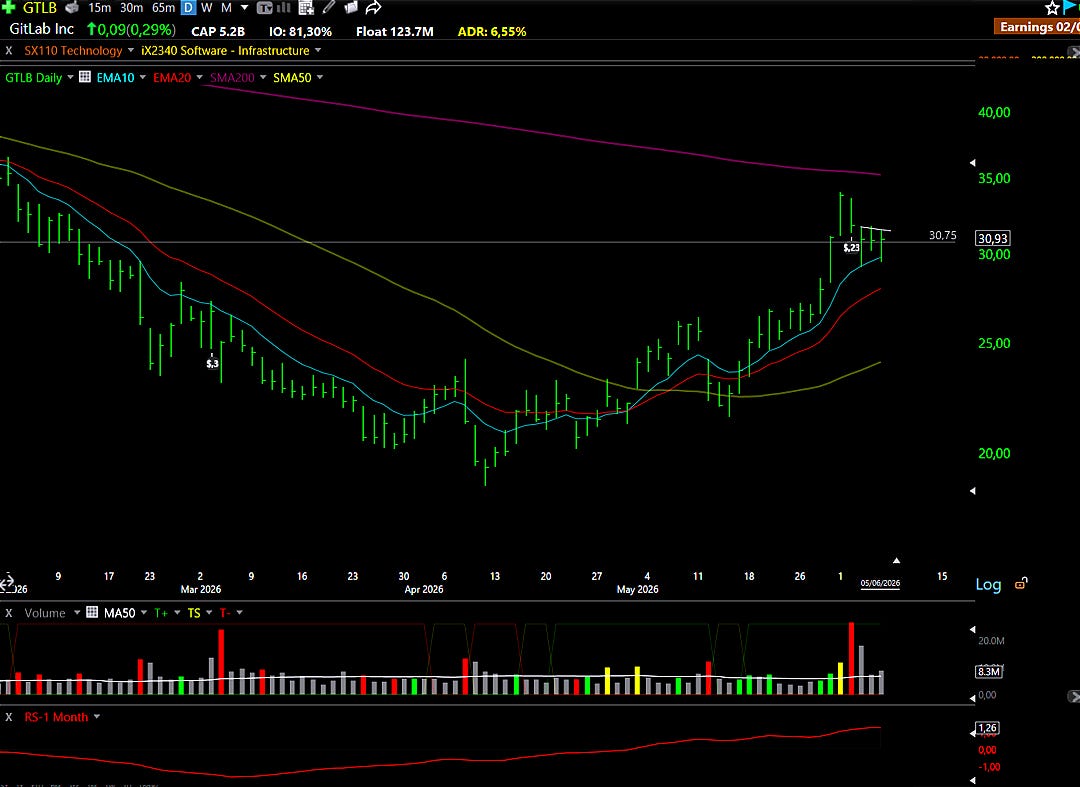
Technical Outlook: The price action on Friday was the detail worth noting. With the Nasdaq collapsing over four percent, GitLab closed flat. That kind of relative strength in a session like that one is not accidental. The stock tested the 10-day EMA for the second time this week and held both times, closing the day green after recovering early losses. The consolidation is young, only a couple of sessions deep, so ideally we see more before committing. But this goes on the must-watch list, and Friday’s behavior is exactly the kind of signal we pay attention to when the broader market is doing its worst.

Why We Don’t Wait for Sunday
Markets don’t move on your schedule. The best low-risk entries don’t announce themselves politely and wait for the weekend newsletter.
They show up when they show up. And if you’re not positioned, you miss them.
Paid members get real-time alerts: exact entries, stops, position sizing, and the thesis behind every trade. The same information we use to manage our own capital.
Free members get just one pick on Sunday.
Does that sound like an edge to you?
What’s Inside Premium
Free Access to TradeDeck
Premium members get early access to TradeDeck, the trading platform we’re building. The value of the platform alone already exceeds the cost of the subscription.
Watchlist Elite (5-7 Stocks)
Each selection undergoes rigorous financial analysis, technical evaluation, and strategic assessment.
Full Portfolio Transparency
Every position we hold. Entry price. Current P&L. Stop level. Real money, real risk.
Real-Time Trade Alerts (Chat Access)
This is where the edge lives. Exact entries, stops, and position sizing. Real-time. No lag
Quick Picks (5 Names)
Additional setups that just missed our main criteria but are worth watching.
Chat Access
See our thought process in real time. Ask questions. Watch how we manage risk.
The Tools We Actually Use
Member discounts on TC2000, Fiscal.ai, and other platforms. Same tools, better pricing.
What Paid Members Say:
We’re entrepreneurs first, traders second. We’ve sat in the CEO chair. We know what real execution looks like and how to spot it.
€39/month or 299€/year. Less than one losing trade. Cancel anytime.
Portfolio updates and new positions:
