

🚀 Wall Street Radar: Stocks to Watch Next Week
💼 Volume 77

The Fog
The thing about panic is that it doesn’t announce itself. No sirens, no flashing lights. Just a slow tightening in the chest, a shift in the air you can’t quite name. The market doesn’t scream, it whispers. And if you’ve been around long enough, you learn to listen for those whispers in the static.
Last week, the whisper got louder.
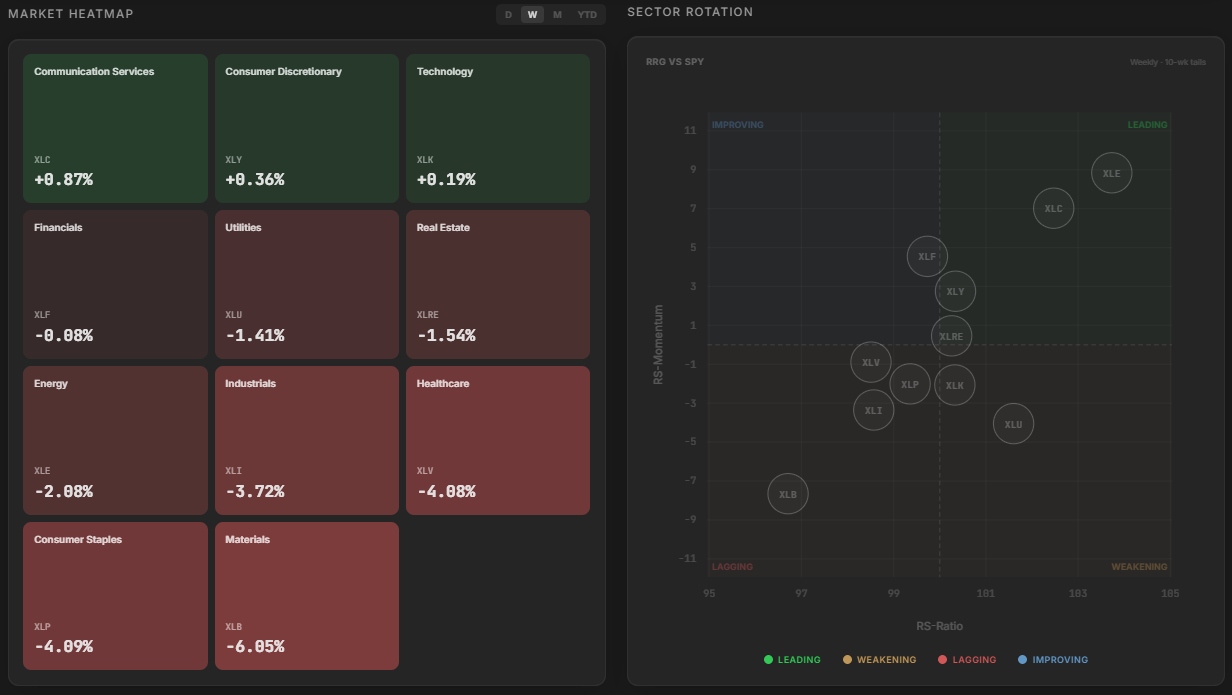
Oil didn’t just tick up. It moved, nearly twenty dollars in a handful of trading days, punching through $94 a barrel like it had somewhere urgent to be. Traders started using that number again, the one they always use when they want to sound prescient but are really just scared: one hundred. A hundred-dollar crude. It’s close enough now that you can smell it.
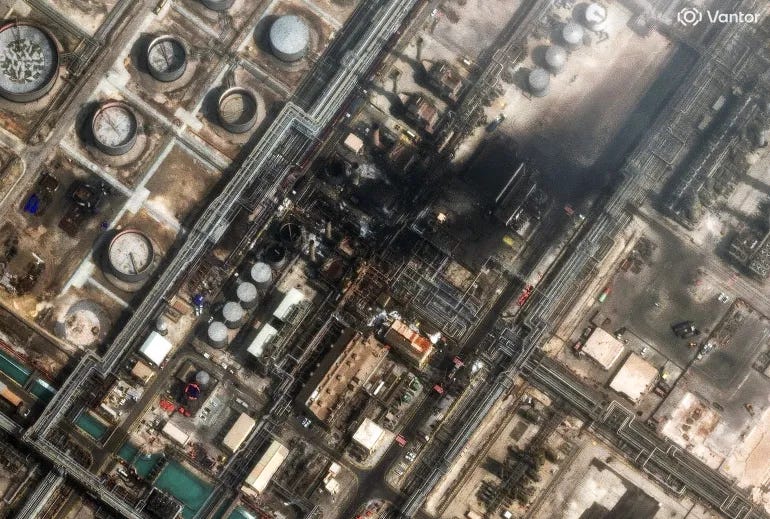
Meanwhile, the Gulf is burning. Not metaphorically. Actually burning.
Iran launched missiles and drones across the region. Kuwait lit up, Dubai’s alert systems wailed into the night, Bahrain and Saudi Arabia found themselves in the crosshairs. Israel and the United States kept dropping bombs inside Iran, a campaign that’s already put more than fourteen hundred people on the ground. The body count climbs. The oil price climbs with it.
Here’s what matters, and it’s not the geopolitics seminar version: the Strait of Hormuz, that narrow little chokepoint where a fifth of the world’s oil squeezes through every single day, is now inside the blast radius. Every tanker that passes through is a bet. Every insurance underwriter is repricing risk in real time. Every central banker is running scenarios they hoped they’d never have to run again.
And Washington? Washington shrugged. Trump was asked about gas prices, and he said what every president eventually says when the chips are down: if they rise, they rise.
War first. Economy second. The honesty was almost refreshing.
When the Numbers Stop Adding Up
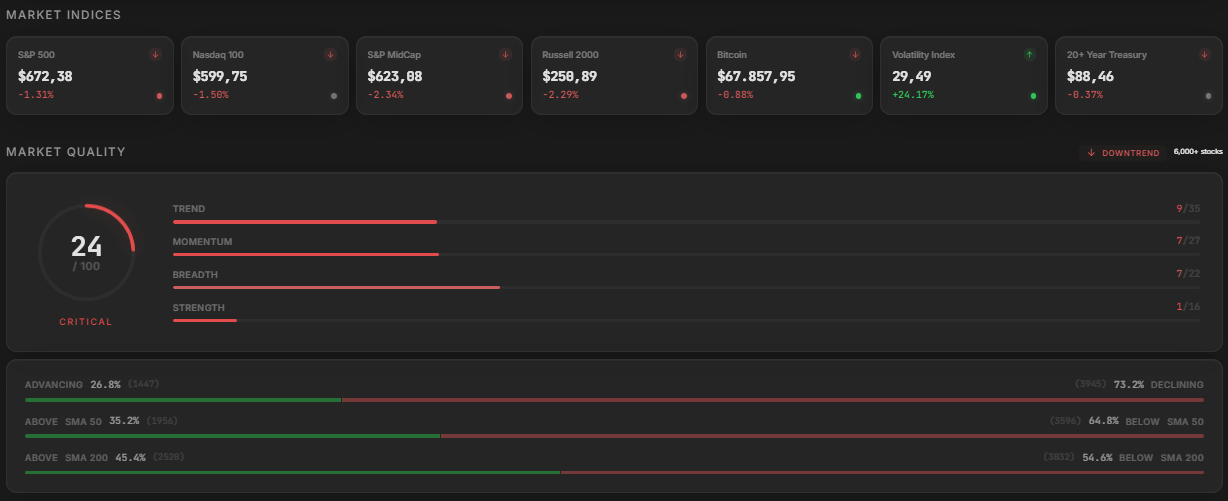
The economic data started cracking at the same time. Unemployment is back up to 4.4 percent. Nonfarm payrolls were down 92,000 last month, and that’s after they went back and revised the earlier numbers lower. Samuel Tombs at Pantheon Macroeconomics put it plainly: “The idea that the labor market has turned a corner implodes with this report.”
So now you’ve got energy inflation spiking just as the labor market softens. If you’ve been in this business more than a decade, you know this script. You’ve seen it before. 1973. 1990. Every time geopolitics slams into a fragile cycle, risk assets get punished. The market doesn’t forget these patterns; it just pretends to until it can’t anymore.
What makes this moment different, or at least more slippery, is the politics underneath. Saudi Arabia, which reportedly pushed Washington to hit Iran earlier, is now quietly looking for an exit ramp, trying to open back channels with Tehran. In the UAE, frustration is spilling into public view.
Markets can handle wars; they understand. Clear fronts. Predictable timelines. A beginning, a middle, an end. What they can’t handle is fog. Expanding theaters. Uncertain retaliation. Critical infrastructure is sitting within missile range, and nobody is sure what will happen next.
You can see it in the positioning. Demand for Treasury inflation protection has surged, pushing valuations to the highest levels in nearly a year. It’s the kind of quiet, defensive rotation that happens before the loud stuff. The stuff that makes headlines.
Time to Go Fishing?
If you’ve been doing this long enough, you recognize the phase. The screens are busy. The news is constant. But the conclusions? Scarce. Volatility rises, narratives multiply, and conviction, real conviction, becomes strangely hard to find. The battlefield map gets drawn in fog, and everyone’s pretending they can still see the terrain.
Jesse Livermore, the old speculator who made and lost fortunes long long time ago, had a line that still gets quoted on trading circles: “There is time to go long, time to go short, and time to go fishing.”
Is this fishing time?

The smartest operators know when the game becomes unreadable. During the oil crisis of the ‘70s, in Kuwait in 1990, after September 2001, every time the world tilted sideways, the best traders did the same thing. They reduced exposure. They held liquidity. They waited for the structure of the world to reveal itself again.
This moment has that same texture. Oil climbing. Geopolitical risk spreading. US macro data starting to crack. But no clear trend has fully formed yet. There’s movement everywhere and clarity nowhere.
In situations like this, the market doesn’t have much to say. And neither should you.
Sometimes, the most sophisticated strategy is the oldest one in finance. Hold cash. Watch carefully. Wait until the fog lifts.
Because the fog always lifts. The question is what you’ll see when it does, and whether you’ll still have enough ammunition left to do something about it.
We are currently developing an application.
It is not a generic solution for every market participant, but a platform built specifically for swing trading, momentum strategies, and short to medium-term investing.
If we see meaningful interest, we will open a limited number of testing spots and allow selected users to access the platform early.
As previously stated, all paid subscribers will receive full access to the platform at no additional cost.

Latest articles:


Each stock carries a risk badge: ⚠️ High | 📊 Medium | 🛡️ Low.
Based on volatility, float, technicals, and fundamentals. Size your positions accordingly.
📈 Free Setup: Make It Count
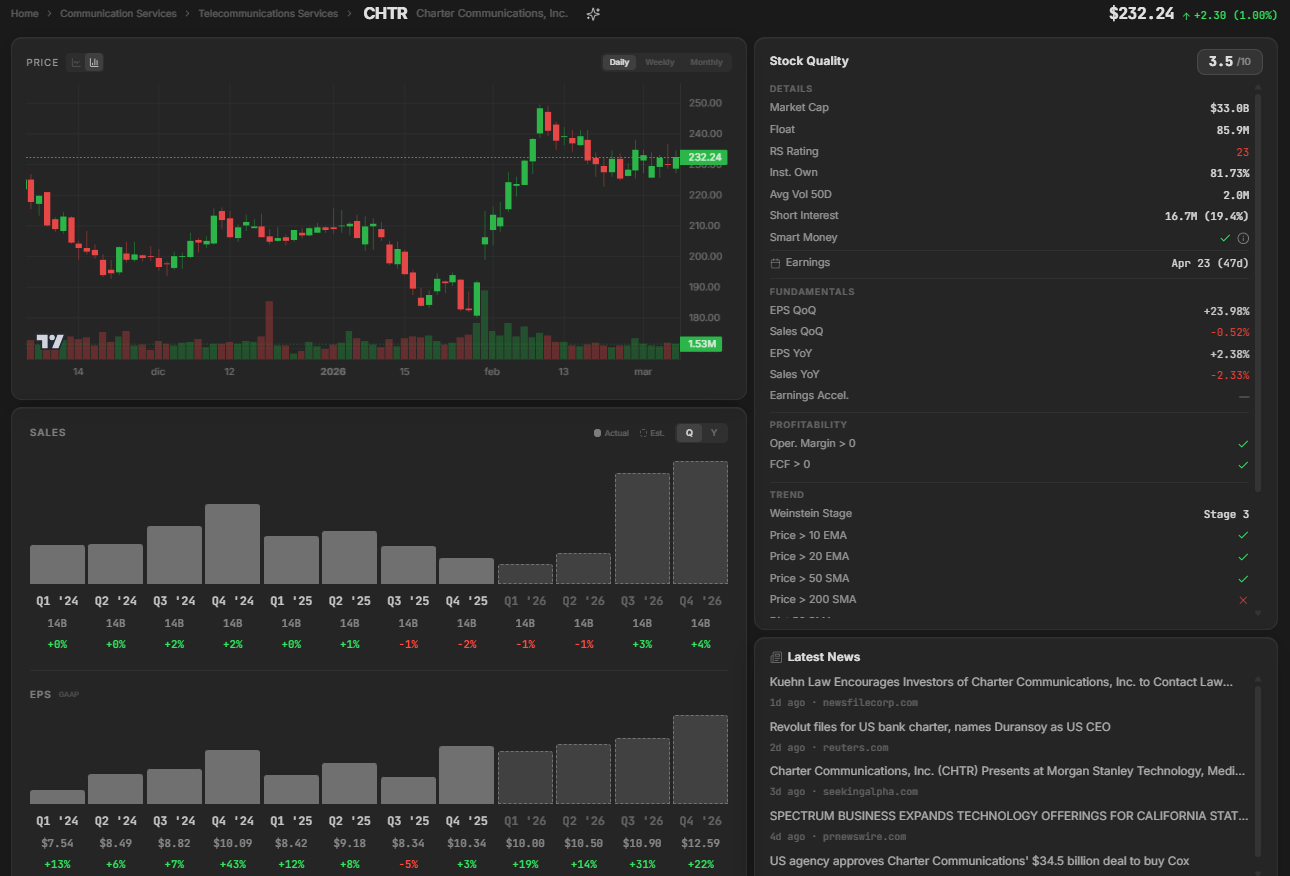
CHTR: Charter Communications📊
What they do: One of America's largest broadband and cable connectivity providers
Why watch? In a market dominated by AI headlines and momentum-driven narratives, Charter Communications represents the kind of overlooked, cash-generative business that tends to reward patient investors. The stock isn’t extended, the sector isn’t fashionable, and that’s precisely the point.
Charter has executed a meaningful strategic reinvention. The company has deliberately shifted away from its identity as a traditional cable operator toward becoming a fully converged connectivity provider, meaning it bundles broadband, video, and increasingly mobile services into a single, integrated offering. This isn’t just a marketing repositioning; it reflects a genuine operational transformation designed to defend market share against two growing competitive threats: fiber overbuilders (telecom companies laying new fiber-optic lines in Charter’s territory) and fixed wireless access providers (companies like T-Mobile and Verizon offering home internet through cellular networks).
The early results of this strategy are encouraging. Internet subscriber losses, a persistent concern for investors, have moderated meaningfully in recent quarters. Meanwhile, mobile line additions continue to accelerate: a critical metric because mobile bundling increases customer stickiness and reduces churn. When a customer has both their home internet and mobile phone service through the same provider, they’re far less likely to switch.
Charter’s approach to returning capital to shareholders deserves particular attention. The company pays no dividend, which might initially seem like a negative. In reality, it reflects a deliberate and highly tax-efficient capital allocation strategy. Over the past five years, Charter has repurchased enough shares to reduce its total share count by more than 30%. For long-term shareholders, this means each remaining share represents a larger ownership stake in the business without any tax event.
The underlying business benefits from durable secular tailwinds. Remote work arrangements have permanently elevated household bandwidth consumption. Streaming continues to displace traditional broadcast television, driving demand for faster, more reliable internet connections. And as smart home devices, connected appliances, and eventually autonomous vehicles proliferate, the demand for robust home connectivity will only intensify. Charter’s infrastructure sits at the center of all of this.
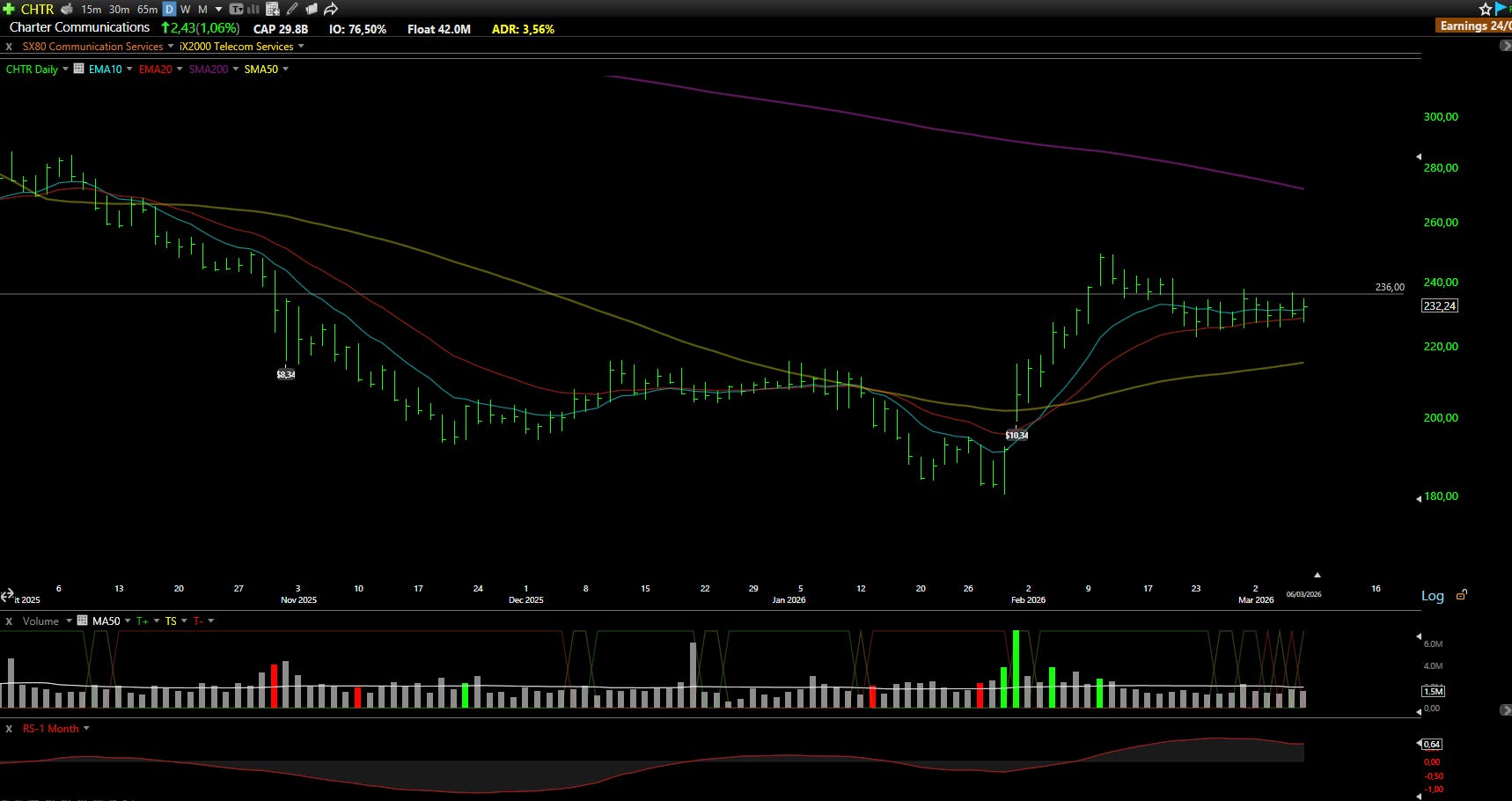
Technical Outlook: The chart setup is constructive, though it demands patience. The stock has been surfing the 20-day EMA for several sessions, but the price action has been frustrating. Every apparent breakout attempt has been met with a quick reversal. For nearly two weeks, the stock has traded in an almost perfectly sideways range just below the $236.00 level, which has emerged as the clear line in the sand. A decisive close above $236.00 is the trigger that would open the door to the next leg higher. Notably, in a market environment that has been broadly challenging, Charter has been displaying impressive relative strength—holding its ground while many other names have struggled. That kind of resilience in a difficult tape is often a precursor to outperformance when conditions improve.
Why We Don’t Wait for Sunday
Markets don’t move on your schedule. The best low-risk entries don’t announce themselves politely and wait for the weekend newsletter.
They show up when they show up. And if you’re not positioned, you miss them.
Paid members get real-time alerts: exact entries, stops, position sizing, and the thesis behind every trade. The same information we use to manage our own capital.
Free members get just one pick on Sunday.
Does that sound like an edge to you?
What’s Inside Premium
📊 Watchlist Elite (7-9 Stocks)
Each selection undergoes rigorous financial analysis, technical evaluation, and strategic assessment.
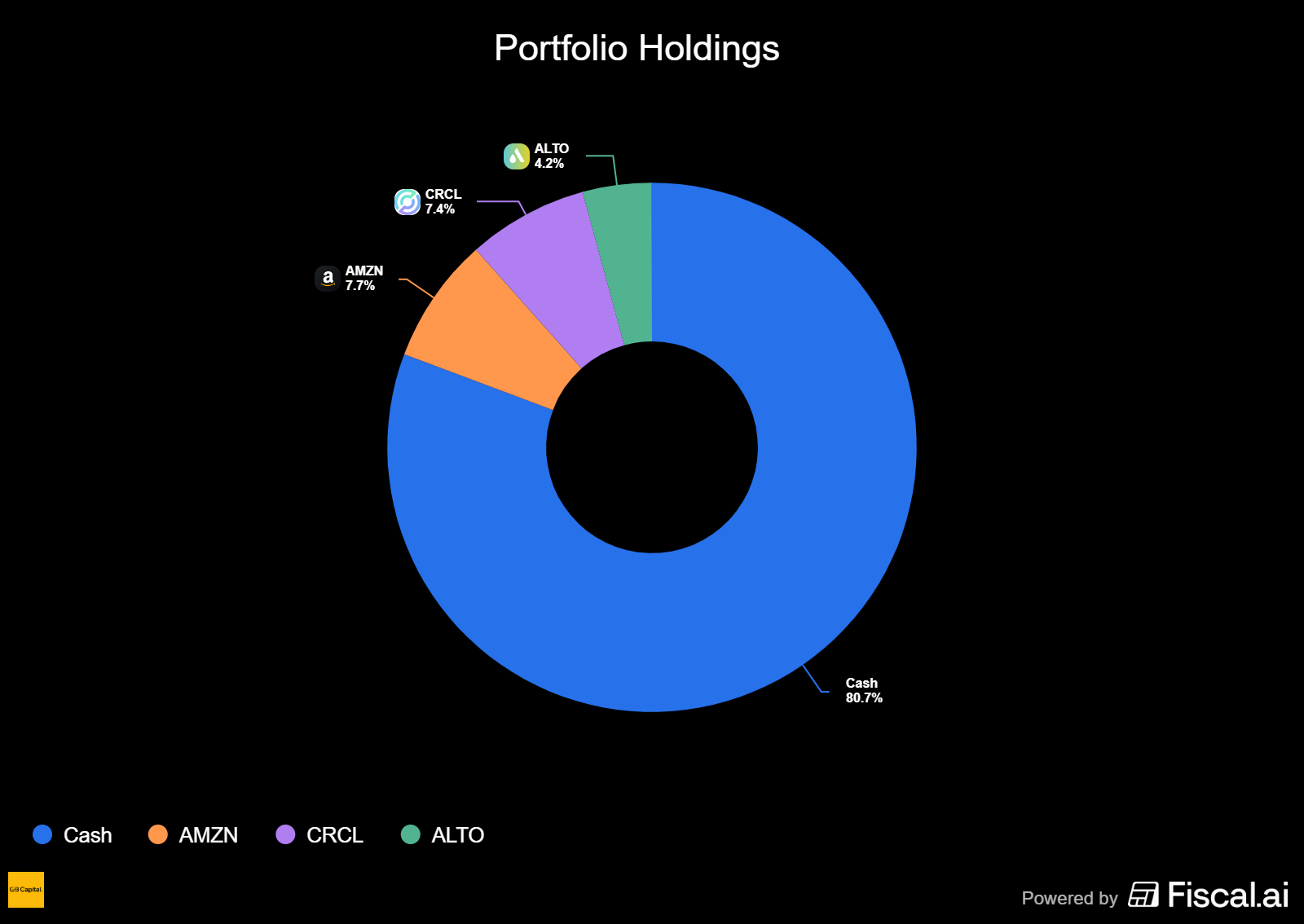
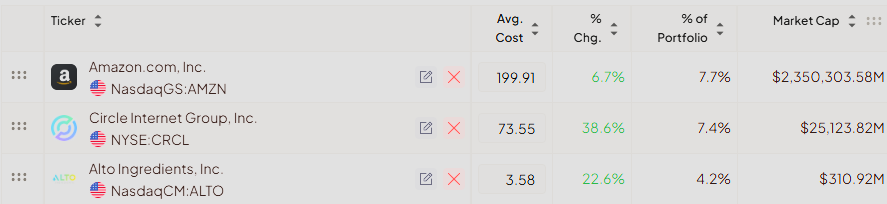
💼 Full Portfolio Transparency
Every position we hold. Entry price. Current P&L. Stop level. Real money, real risk.
⚡ Real-Time Trade Alerts (Chat Access)
This is where the edge lives. Exact entries, stops, and position sizing. Real-time. No lag
🎯 Quick Picks (5 Names)
Additional setups that just missed our main criteria but are worth watching.
💬 Chat Access
See our thought process in real time. Ask questions. Watch how we manage risk.
🛠️ The Tools We Actually Use
Member discounts on TC2000, Fiscal.ai, and other platforms. Same tools, better pricing.
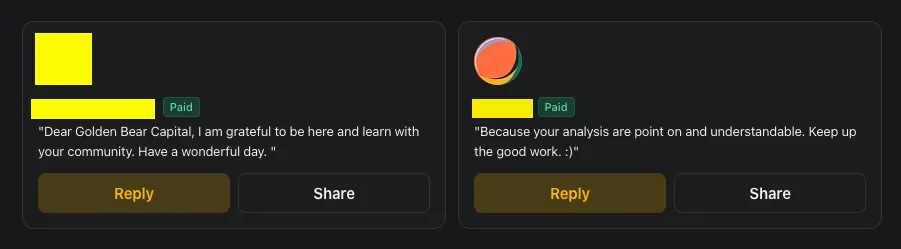
What Paid Members Say:
We’re entrepreneurs first, traders second. We’ve sat in the CEO chair. We know what real execution looks like and how to spot it.
€39/month or 299€/year. Less than one losing trade. Cancel anytime.
Portfolio updates and new positions:

⚡ AI-optimized, human-verified: Our expert team carefully selected Premium market intelligence from Fiscal.ai data. Explore now →
💎📈 Watchlist Elite: Premium Market Movers
